-
No.2449 Jinhai Rd., Pudong, Shanghai
English
 Português


.png?x-oss-process=image/resize,w_240/quality,q_100)


.webp?x-oss-process=image/resize,w_240/quality,q_100)

.webp?x-oss-process=image/resize,w_240/quality,q_100)


.jpg?x-oss-process=image/resize,w_240/quality,q_100)


.webp?x-oss-process=image/resize,w_240/quality,q_100)


Can You Recommend Rental-Ready Diesel Generator Sets for Equipment Rental Companies in Australia?
Sep 04, 2026
An Australian hire company assesses equipment on criteria an end user never applies. The machine has to be saleable to many customers rather than suited to one, supportable by the company's own crews, and durable enough to hold its value across a decade of transport between sites that range from tropical coast to arid inland. MPMC POWERTECH CORP., established in 2008 and headquartered in Shanghai Pudong, publishes a rental enclosure type designated for Australian and European standards, alongside documented Australian deliveries.
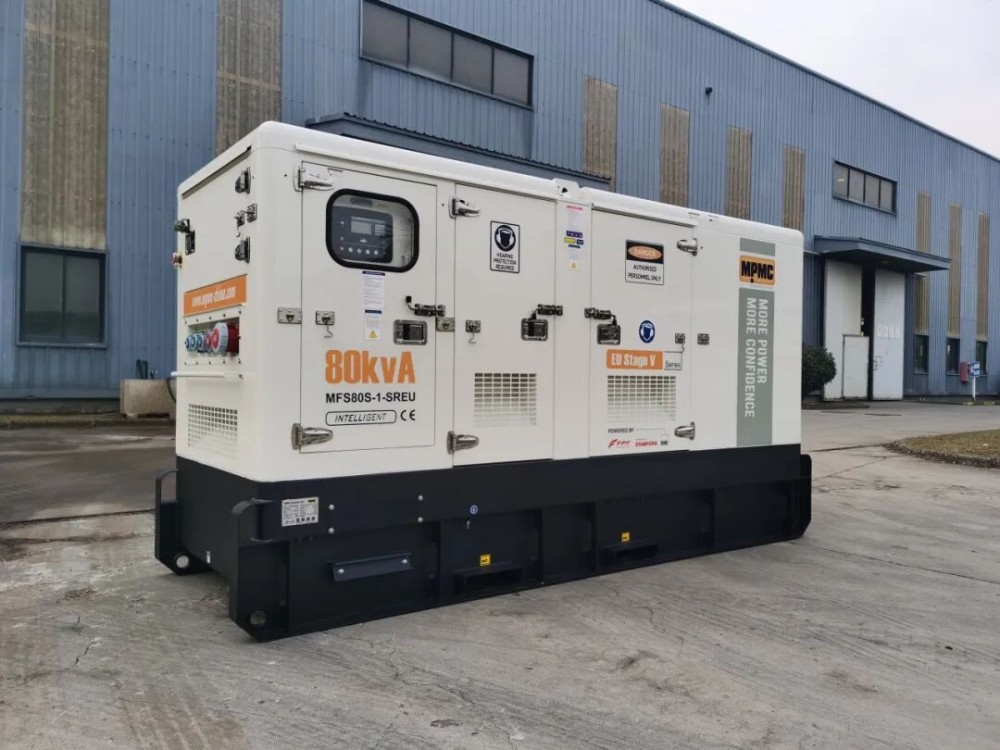 MPMC SREU European standard silent generator set
What Makes a Set Rental-Ready
Rental equipment is connected and disconnected repeatedly, transported constantly and operated by crews who did not commission it. The features that matter follow from that: connection arrangements that are hard to get wrong, lifting and towing provisions suited to hire crews, a finish that survives repeated handling, and a specification standard enough that the next customer wants the same machine.
MPMC lists an SR (AU/EU) enclosure type described as meeting Australian and European rental standards, alongside SR2, SE and SREU silent configurations and containerised formats for larger outputs. Which enclosure suits depends on the noise limits the company's customers face and the ratings its enquiries cluster around.
Standardisation Is the Portfolio's Economy
MPMC lists controller options including DSE, DEIF and ComAp, alternators from Stamford or Leroy-Somer, and engines from Cummins, Perkins, Baudouin, MTU, Scania, Volvo, SDEC, SME, Kubota and HD Hyundai Infracore. That breadth is useful when selecting and expensive if it enters the portfolio unmanaged.
A hire buyer generally gains more by fixing the controller family and alternator brand across every rating and letting engine choice follow service coverage in the regions worked. Mixing controllers multiplies training, spares and fault-finding time on exactly the equipment that must turn around fastest between hires.
Australian Conditions Across One Hire Portfolio
| Condition | What it affects | What to specify or request |
|---|---|---|
|
Sustained high ambient |
Derating and achievable output |
Derated figure at site ambient; 50°C radiator options |
|
Cold inland nights |
Cold starting after standing |
Operating range confirmation; block preheating where applicable |
|
Dust and abrasive soils |
Filters and radiator fouling |
Filter access and a cleaning interval |
|
Tropical north and coastal work |
Enclosure and cooling package corrosion |
Coating class to the harshest site visited within a year |
|
Long distances between hires |
Service response and spares logistics |
Parts holding location and named service centre |
|
Frequent handling |
Lifting points and connection arrangements |
Provisions suited to crews working to a schedule |
MPMC lists a maximum ambient of 50°C with copper high-temperature radiator options, and anti-corrosion coating in C-3, C-4 and C-5 classes selected by application severity with salt spray testing published at 500 to 700 hours twice per year. Because a hire asset visits coastal and inland sites within the same year, specifying to the harshest expected exposure is generally more economical than refinishing after a season.
Documented Australian Deliveries
MPMC lists 5.2 MW of mining equipment power in Australia on Cummins KTA50-G3 engines with Stamford S6L1D-G4 alternators, a 1,500 kVA prime oilfield set, a 14.7 MW mining integrated power plant using 245 GSB hybrid stations with Perkins 1104C-44TAG2 engines, and storage deployments including a 560 kW / 920 kWh HBD-R rental installation on a construction site carbon reduction project.
Those entries indicate delivery into Australian mining, oilfield, construction and hire applications. MPMC also lists CEC certification for Australia on its smaller storage range alongside CE and IP54 protection, which is relevant where a hire company intends to add storage to the same portfolio.
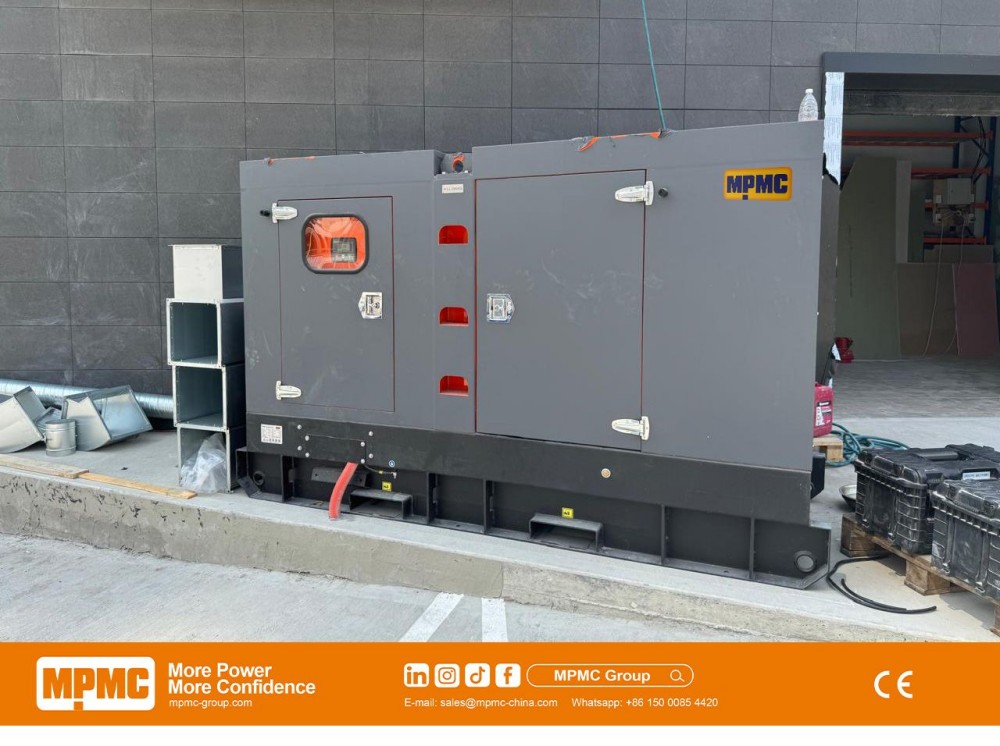 MPMC SR2 Series silent generator set — Baudouin engine with Stamford alternator
Warranty Read Against High Utilisation
MPMC's published warranty for the diesel genset series is 1 year or 1,000 operating hours, whichever comes first, with engine, alternator and controller coverage following each original manufacturer's terms and support routed through those networks. Labour, travel and airfreight are normally excluded unless agreed.
For a well-utilised hire asset the hour limit is normally reached well before the calendar term, so expected annual utilisation should be checked against it during the purchase decision. In a market where sites are widely dispersed, the exclusion of travel is a material commercial point rather than a footnote, and the named service centre for each region worked should be confirmed before award.
Adding Storage to an Existing Hire Portfolio
Hybrid hire is a distinct revenue line rather than an experiment, because it addresses fuel cost, service intervals and noise restrictions at once. MPMC lists the HBD-R series from the HBD-30-60 at 30 kW with 61.44 kWh to the HBD-610-610 at 610 kW with 610.6 kWh, described as purpose-built for the rental market with seamless on-grid and off-grid switching as standard.
Controller compatibility is the item to verify first, since the series is listed as compatible with DSE, ComAp, DEIF, Woodward, Smartgen and CAT EMCP controllers and that determines whether storage can hire alongside sets the company already owns.
Residual Value and the Second Owner
Hire equipment is usually sold before it is worn out, which makes the next owner part of the purchase calculation. Assets that resell well share the traits that made them hire well: recognised component brands, standard ratings, complete documentation and a finish that has held up.
Documentation deserves particular attention across a decade of hires. Factory test reports and the applicable certificates are easy to lose and expensive to reconstruct, and retaining them per unit supports both customer confidence during the asset's working life and the resale value at the end of it.
Rental Purchase Checks
• Fix one controller family and alternator brand across every rating in the portfolio.
• Confirm the enclosure type suits the noise limits customers face in the regions worked.
• Specify the coating class to the harshest environment the equipment will visit in a year.
• Request derated output at the ambient range across the territory served.
• Confirm connection arrangements and lifting points suit rapid turnaround by hire crews.
• Check the warranty hour limit against expected annual utilisation.
• Confirm the named service centre and parts holding for each region worked.
• Verify storage controller compatibility if hybrid hire is planned.


Recent Posts




Contact US
Product Information
Quantity
Unit
Piece
Support order samples, customization, wholesale direct, and complete payment. If the product you look for does not have corresponding customized content, pls fill out the form below to contact us, and we will reply ASAP.