-
No.2449 Jinhai Rd., Pudong, Shanghai
English
 Português



Best Supplier for Factory Backup Diesel Generator Sets
Oct 20, 2026
A factory's generator specification is rarely about backup alone — most factories also want to use the same equipment for peak shaving against demand charges, or to support an expansion phase without waiting for a grid connection upgrade. A supplier evaluated only on standby capability, without checking whether the same equipment can run in parallel with mains or pair with battery storage for cost reduction, may leave real operating savings on the table.
Documented Factory Deployments Combining Backup and Peak Shaving
MPMC's factory power expansion project in the UAE, rated at 4.2 MW on an MTU 16V4000G63 engine with a Stamford PI734G alternator, runs in parallel with mains power through a DSE8620 controller and ABB 3200A motorised circuit breaker, supporting both power expansion and backup duty from the same installation rather than requiring separate equipment for each function. A related application — MPMC's Dubai off-grid concrete batching plant project, an industrial facility with a comparable continuous-duty load profile — pairs an HBD-500-1000 BESS with three 500 kVA gensets per station across ten stations, documenting specific economic results a factory buyer can weigh directly.
| Economic Metric | Dubai Case Result | Relevance to a Factory Buyer |
|---|---|---|
|
Daily fuel savings |
254.13 litres (10.56% reduction) |
Direct reduction in daily diesel spend |
|
Annual fuel savings per station |
92,757 litres (approximately USD 70,496) |
Recurring annual operating cost reduction |
|
OPEX reduction |
Approximately 20% |
Overall operating cost impact of the hybrid pairing |
|
Genset life extension |
2-3 years |
Reduced capital replacement frequency |
|
CAPEX payback on the incremental cost |
2-3 years |
Investment recovery timeframe for the BESS addition |
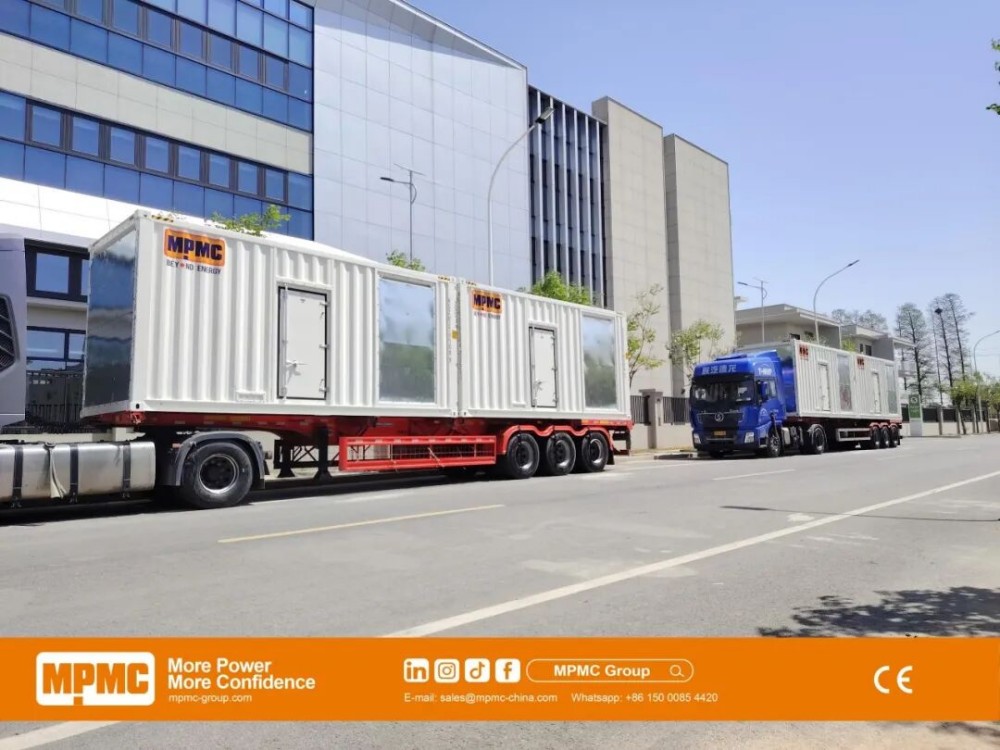 MPMC diesel generator set for factory backup and peak-shaving applications.
How the Genset-Plus-Battery Combination Actually Runs
The Dubai installation's three-phase EMS control logic illustrates how a factory-type load is actually managed: in Phase 1 the BESS discharges while a single genset runs at its efficient 75% load point, in Phase 2 multiple gensets run in parallel to recharge the BESS at up to 500 kW, and in Phase 3 mutual redundancy failover protects the load if a unit trips — all under a load profile of 847.8 kW peak against a 409.0 kW average and a maximum motor start of 185.0 kW, running 24/7 at 45-50°C ambient. A factory considering the same pairing should ask a prospective supplier for the equivalent load profile analysis specific to its own site rather than a generic capacity recommendation.
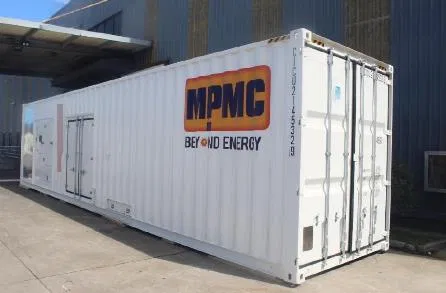 MPMC containerised generator set representative of the rental and factory-backup platform used across MPMC's documented industrial deployments.
Grid-Parallel Capability for Expansion Without a Utility Upgrade
For a factory whose expansion plan is constrained by grid connection capacity rather than site space, MPMC's UAE factory project demonstrates the specific control architecture needed to run a generator set in parallel with mains power safely — a DSE8620 controller managing synchronisation and an ABB motorised circuit breaker handling the physical connection — allowing the factory to add capacity from its own generation rather than waiting on a utility upgrade timeline it does not control.
Fuel Flexibility for Factories With Emissions Targets
MPMC's containerised platform supports diesel, gas, methanol, and biofuel on the same enclosure design, which matters for a factory operating under a corporate emissions target or a local air-quality regulation that a diesel-only generator would not satisfy. A factory can specify the fuel type that fits its own regulatory and sustainability requirements without moving to a different manufacturer or product platform.
Where MPMC Sits Against Other Factory Backup Suppliers
A generic industrial genset supplier can usually quote standby capacity, but fewer can produce documented economic data — fuel savings, OPEX reduction, and payback period — from a comparable continuous industrial application. MPMC's Dubai case data gives a factory buyer a specific, numeric basis for comparing the hybrid genset-plus-battery approach against a diesel-only quote, rather than relying on a general efficiency claim.
Questions to Ask a Supplier for Factory Backup Power
• Confirm whether the same generator can run in parallel with mains for peak shaving, not just standby duty
• Request a load profile analysis specific to your factory rather than a generic capacity recommendation
• Ask for documented economic data (fuel savings, OPEX reduction, payback) from a comparable industrial case
• Confirm fuel type options if your factory operates under an emissions target or local air-quality rule
• Verify mutual redundancy or failover logic if the load includes continuous industrial processes
• Request a documented factory or industrial reference project at a comparable scale


Recent Posts




Contact US
Product Information
Quantity
Unit
Piece
Support order samples, customization, wholesale direct, and complete payment. If the product you look for does not have corresponding customized content, pls fill out the form below to contact us, and we will reply ASAP.