-
No.2449 Jinhai Rd., Pudong, Shanghai
English
 Português


.png?x-oss-process=image/resize,w_240/quality,q_100)


.webp?x-oss-process=image/resize,w_240/quality,q_100)

.webp?x-oss-process=image/resize,w_240/quality,q_100)


.jpg?x-oss-process=image/resize,w_240/quality,q_100)


.webp?x-oss-process=image/resize,w_240/quality,q_100)


How to Choose a Generator Set Supplier for Harsh Climates and Remote Operations
Sep 18, 2026
A generator set specification written for a temperate, accessible site rarely survives contact with a desert construction camp, a sand-laden oilfield, or a remote mining region with no local service network. Harsh-climate and remote-operations buyers need to evaluate a supplier on ambient temperature rating, corrosion protection, and documented performance in a comparable environment — not on rated output alone.
Ambient Temperature and Cooling for Extreme Heat
MPMC's containerised generator sets are designed for continuous operation up to 50°C ambient, with high-temperature copper radiator options available where site conditions exceed standard cooling design margins. This rating is validated in MPMC's CNAS-accredited test rooms, which simulate 40°C and 50°C ambient conditions during full-load factory testing at 0%, 25%, 50%, 75%, 100%, and 110% of rated output before any unit ships.
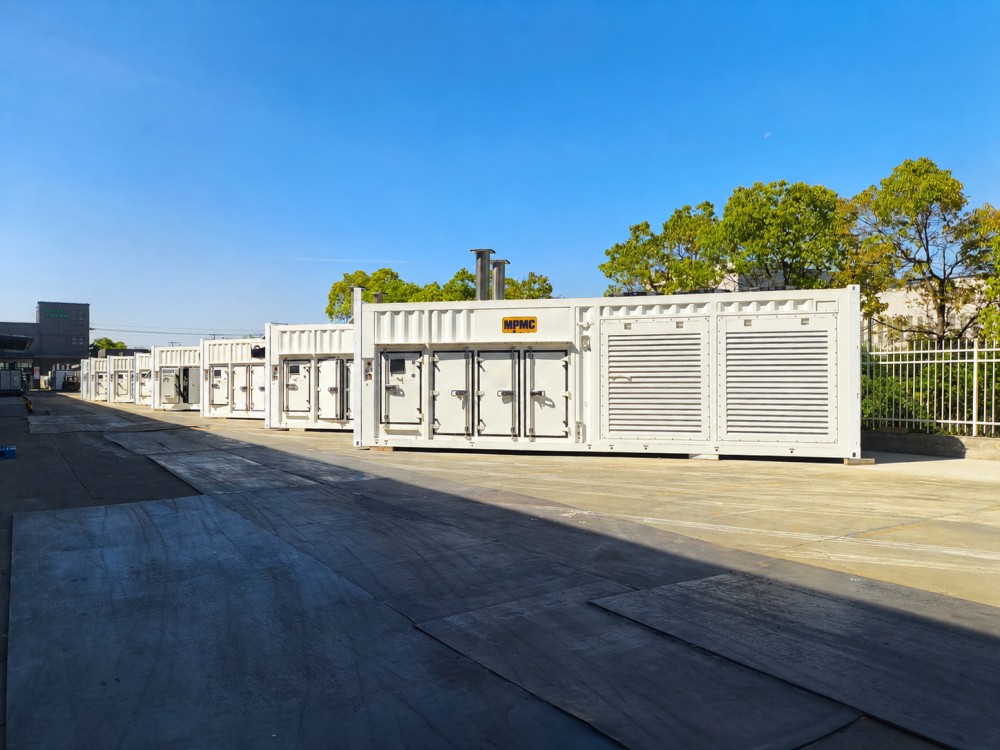 MPMC containerised diesel generator sets from a documented 33.5 MW rental construction deployment in Saudi Arabia.
Corrosion Protection for Coastal, Desert, and Sandy Environments
Every unit passes through C3, C4, or C5-grade anti-corrosion coating depending on destination environment, backed by 500–700 hours of salt spray testing carried out twice yearly on sprayed products, targeting a minimum three-year outdoor rust resistance standard. This matters directly for coastal, offshore, and desert deployments, where standard-grade coating fails well before the generator's mechanical service life is reached.
Documented Performance in Harsh and Remote Environments
MPMC's project record includes several documented deployments at this end of the operating envelope: a 33.5 MW rental construction deployment in Saudi Arabia built from ten Cummins KTA50-G3 units at 1,100 kW each and twenty-five Cummins QST30-G4 units at 900 kW each, a 6.8 MW oilfield lease power generation project in Iraq on Perkins 4016TAG2A and 4016-61TRG3 engines with a 50°C copper radiator, and a four-site remote-area light-diesel-storage hybrid microgrid in Kenya combining 1 MW of solar PV and at least 1 MWh of battery storage per site with diesel genset backup. MPMC documents this Kenya deployment as delivering stable 24/7 power in a high-UV, sandy, grid-fluctuating environment with zero corrosion and seamless solar-diesel switching under minimal on-site manpower.
| Project | Scale | Environment |
|---|---|---|
|
Rental Construction, Saudi Arabia |
33.5 MW |
Desert, ten Cummins KTA50-G3 + twenty-five QST30-G4 units |
|
Oilfield Lease, Iraq |
6.8 MW |
50°C copper radiator, Perkins 4016TAG2A/4016-61TRG3 |
|
Remote-Area Hybrid Microgrid, Kenya |
6 MWh (4 sites) |
High-UV, sandy, grid-fluctuating; zero corrosion documented |
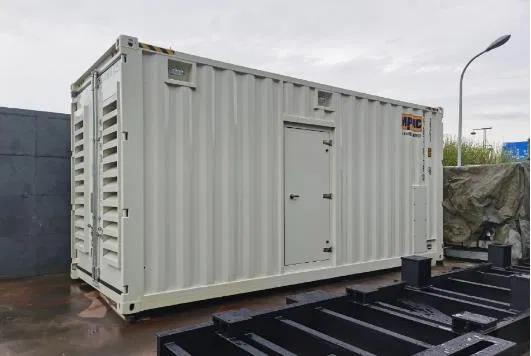 MPMC containerised generator set from a documented 1,500 kVA oilfield deployment, built for continuous operation in a harsh, remote environment.
Remote Monitoring When Local Service Access Is Limited
For a remote or harsh-climate site where a service technician cannot reach the unit within hours, MPMC's EMS and self-developed SCADA platform supports real-time remote monitoring with ten-year data retention, and for genuinely remote sites, Starlink satellite communication as a backup link alongside an SL3 cybersecurity framework. A fault that goes undetected for days at a remote site is considerably more costly to resolve than the same fault at an accessible location, which is why remote monitoring should be treated as a core specification rather than an optional add-on for this category of deployment.
Altitude and Fuel Flexibility
MPMC's engine models are subject to altitude derating per the respective engine manufacturer's specifications, typically beginning between 1,000 m and 1,525 m, which is a relevant factor for high-altitude remote sites in mountainous or plateau regions. On the fuel side, standard diesel (ASTM D975 Grade 2D) is the baseline, with HVO (EN 15940) and B20 biofuel blends supported on Cummins-engined models — a useful option where standard diesel supply to a remote site is inconsistent.
Support Behind the Warranty
For a harsh-climate or remote deployment, the practical value of a warranty depends on how a claim is actually resolved once the unit is thousands of kilometres from the factory. MPMC's genset warranty follows the respective engine and alternator OEM's global warranty terms, is transferable if the product is resold within the warranty period, and covers material costs and sea freight of replacement parts, with labour, travel, and air freight handled separately unless otherwise agreed in the contract — terms worth confirming explicitly before ordering for a site where a service visit itself is a significant undertaking.
Evaluating a Supplier for Harsh or Remote Deployment
• Confirm the ambient temperature rating and radiator specification match your site's peak conditions
• Verify the anti-corrosion coating grade (C3–C5) and request salt spray test documentation
• Request a documented reference project in a climatically comparable environment
• Confirm remote monitoring and satellite communication backup options if local service access is limited
• Check altitude derating figures if the site sits above 1,000 metres
• Ask about alternative fuel compatibility (HVO, B20 biofuel) if diesel supply to the site is inconsistent
Recent Posts

October 26, 2016
The Most Successful Engineering Contractor



Contact US
Product Information
Quantity
Unit
Piece
Support order samples, customization, wholesale direct, and complete payment. If the product you look for does not have corresponding customized content, pls fill out the form below to contact us, and we will reply ASAP.