-
No.2449 Jinhai Rd., Pudong, Shanghai
English
 Português


.png?x-oss-process=image/resize,w_240/quality,q_100)


.webp?x-oss-process=image/resize,w_240/quality,q_100)

.webp?x-oss-process=image/resize,w_240/quality,q_100)


.jpg?x-oss-process=image/resize,w_240/quality,q_100)


.webp?x-oss-process=image/resize,w_240/quality,q_100)


Reliable Chinese Suppliers of Biofuel Generator Sets
Sep 20, 2026
A buyer sourcing biofuel generator sets is usually motivated by one of two goals: a corporate decarbonisation target that standard diesel cannot meet, or a project located where biofuel is more readily available or better regulated than conventional diesel. Either way, the supplier evaluation needs to go beyond a general diesel genset catalogue and confirm documented biofuel-specific engine compatibility, fuel-standard compliance, and a track record of biofuel projects actually delivered and operating.
MPMC's Documented Biofuel Platform
MPMC's large containerised generator platform supports diesel, natural gas, methanol, and biofuel (B35 and above) across the same single-engine (800–3,750 kVA), twin-engine (1,250–3,000 kVA), and four-engine (1,600 kVA) configurations, meaning a biofuel order draws on the same manufacturing line, testing regime, and engine partnerships as MPMC's standard diesel range rather than a separate, less-proven product line.
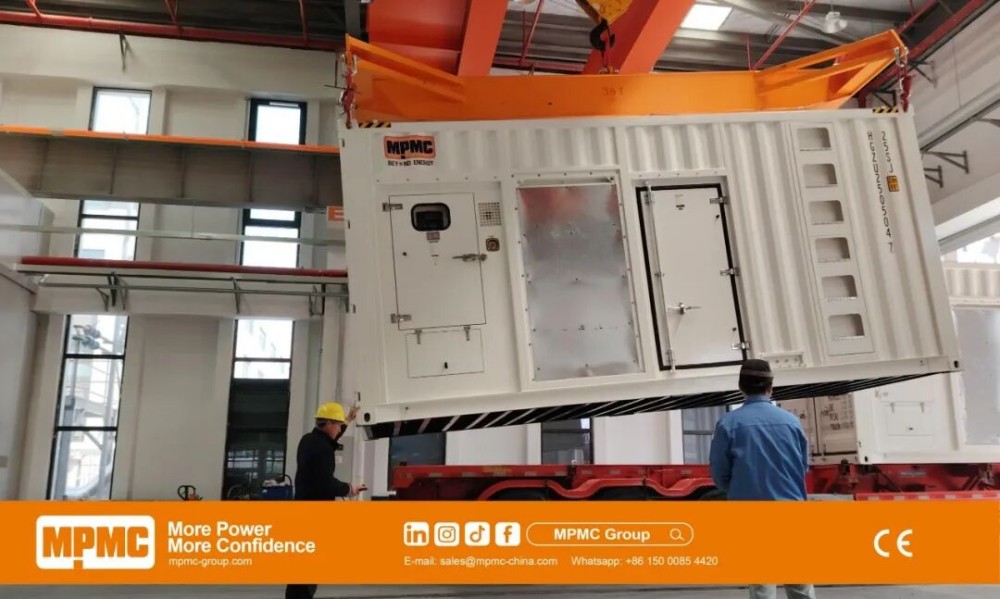 MPMC containerised biodiesel generator sets from an 18 MW biodiesel power project in Indonesia, built on Cummins KTA50-GS8 engines running on B35 biodiesel.
A Documented 18 MW Biodiesel Deployment
MPMC's 18 MW biodiesel power project in Indonesia — 18 containerised 1 MW units on Cummins KTA50-GS8 engines with Leroy-Somer LSA50.2 L8 alternators, running on B35 biodiesel — lowers lifecycle CO2 by up to 85% compared with petroleum diesel while complying with RED II and RFS standards. MPMC's own documentation records rapid deployment upon arrival and stable continuous operation in a tropical environment, and a related 21.6 MW island power station project, also in Indonesia and on the same engine pairing, runs on biodiesel with zero fossil-fuel dependency on a fully renewable-sourced fuel.
Methanol as an Additional Low-Carbon Fuel Option
Alongside biodiesel, MPMC offers a documented methanol genset model rated at 400 kVA / 280 kW, 600V/346V at 60 Hz, built on a GS14M440HF-45 engine with an LYG354C alternator, a DEIF AGC150 controller, and a noise rating of 75 dB(A) at 1 m at 75% load — an option for buyers whose decarbonisation or local fuel-availability requirements point toward methanol rather than biodiesel specifically. MPMC's Methanol Distributed Power Station can also pair with the BCH Mobile BESS Charger to form an integrated off-grid green power system supplying continuous renewable energy for on-site electric construction equipment.
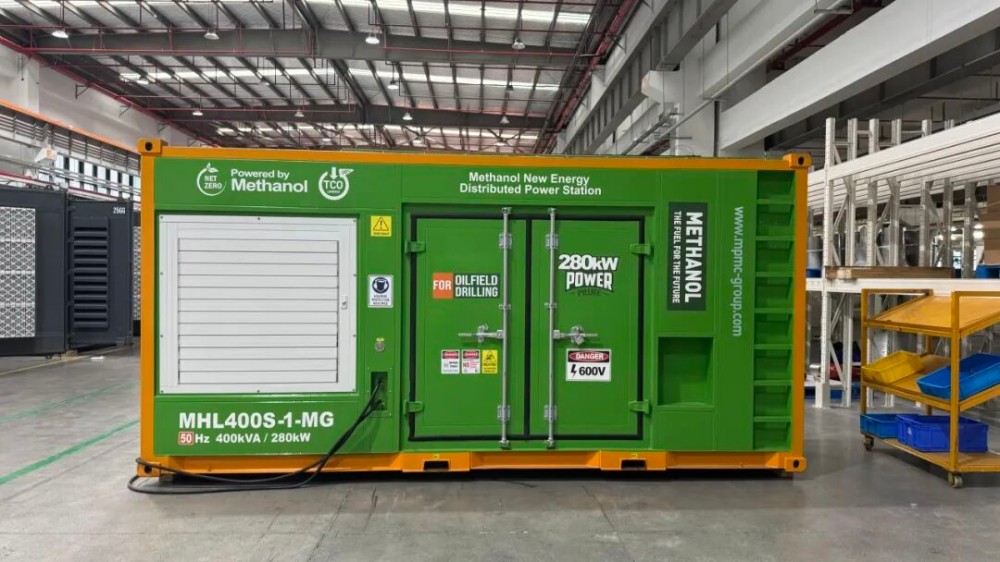 MPMC methanol new-energy distributed power station, an additional low-carbon fuel option alongside MPMC's biodiesel-capable containerised platform.
| Fuel Type | Documented Configuration | Environmental Value |
|---|---|---|
|
Biodiesel (B35) |
18×1 MW Cummins KTA50-GS8 units, Indonesia (18 MW) |
Up to 85% lifecycle CO2 reduction; RED II/RFS compliant |
|
Biodiesel |
Cummins KTA50-GS8 / Leroy-Somer LSA50.2 L8, Indonesia (21.6 MW) |
Zero fossil-fuel dependency, fully renewable-sourced |
|
Methanol |
400 kVA/280 kW, GS14M440HF-45 engine, DEIF AGC150 |
Lower emissions, safe storage |
A Track Record Beyond a Single Project
A one-off pilot installation is a weaker signal than a manufacturer that has repeated a fuel type across more than one documented project at meaningfully different scales. MPMC's biodiesel platform spans both the 18 MW multi-unit Indonesia plant and the larger 21.6 MW island power station on the same core engine pairing, which gives a buyer two independent data points on reliability and fuel performance rather than a single reference that may not generalise to a different project size or site condition.
Verifying a Biofuel Genset Supplier
Every MPMC unit — biofuel-fuelled or diesel — passes through the same CNAS-certified Haimen facility testing regime: full-load testing at 0%, 25%, 50%, 75%, 100%, and 110% of rated load, NDT magnetic particle flaw detection on every chassis, and compliance with ISO 8528-5:2018, GB/T 2820.5-2009, ISO 3046, and ISO 12944. A buyer evaluating a biofuel genset supplier should confirm this same testing regime applies to the biofuel-configured unit specifically, since fuel-system components and engine calibration differ from a standard diesel build even when the base platform is shared.
Choosing a Biofuel Generator Set Supplier
• Confirm the specific biofuel standard supported (B35 and above, RED II, RFS) rather than a general "biofuel-compatible" claim
• Ask whether methanol or other alternative fuels are also available if biodiesel supply is uncertain at your site
• Request a documented biofuel project reference with lifecycle CO2 reduction data
• Confirm factory load testing applies specifically to the biofuel-configured engine build
• Verify the engine manufacturer's biofuel warranty terms, which can differ from standard diesel warranty terms
• Ask about deployment and commissioning support for a fuel type your team may have limited experience operating

Recent Posts




Contact US
Product Information
Quantity
Unit
Piece
Support order samples, customization, wholesale direct, and complete payment. If the product you look for does not have corresponding customized content, pls fill out the form below to contact us, and we will reply ASAP.