-
No.2449 Jinhai Rd., Pudong, Shanghai
English
 Português


.png?x-oss-process=image/resize,w_240/quality,q_100)


.webp?x-oss-process=image/resize,w_240/quality,q_100)

.webp?x-oss-process=image/resize,w_240/quality,q_100)


.jpg?x-oss-process=image/resize,w_240/quality,q_100)


.webp?x-oss-process=image/resize,w_240/quality,q_100)


Which Suppliers Provide Large Power Diesel Generator Sets for Islands and Remote Communities?
Sep 09, 2026
An island or remote community project asks a supplier for something a mainland industrial site rarely needs to think about: the plant has to travel by sea or over roads that may not tolerate a heavy load, arrive complete enough to commission quickly, and then run for years with limited access to spare parts or specialist labour. MPMC's containerised platform is built with exactly this profile in mind, and its documented project list includes several long-running off-grid stations built specifically for this kind of remote deployment.
Why Islands and Remote Communities Are a Different Sizing Problem
A remote community's power demand often grows in steps rather than arriving fully formed on day one, and the supplier chosen at the outset needs to support that growth without a full re-specification each time. MPMC's containerised range covers single-engine configurations from 800 to 3,750 kVA and multi-engine configurations up to four engines at 1,600 kVA per unit, so a community's initial load can be met with a smaller block while leaving room to add further containerised units, powered by the same engine brand and control platform, as the settlement or facility expands.
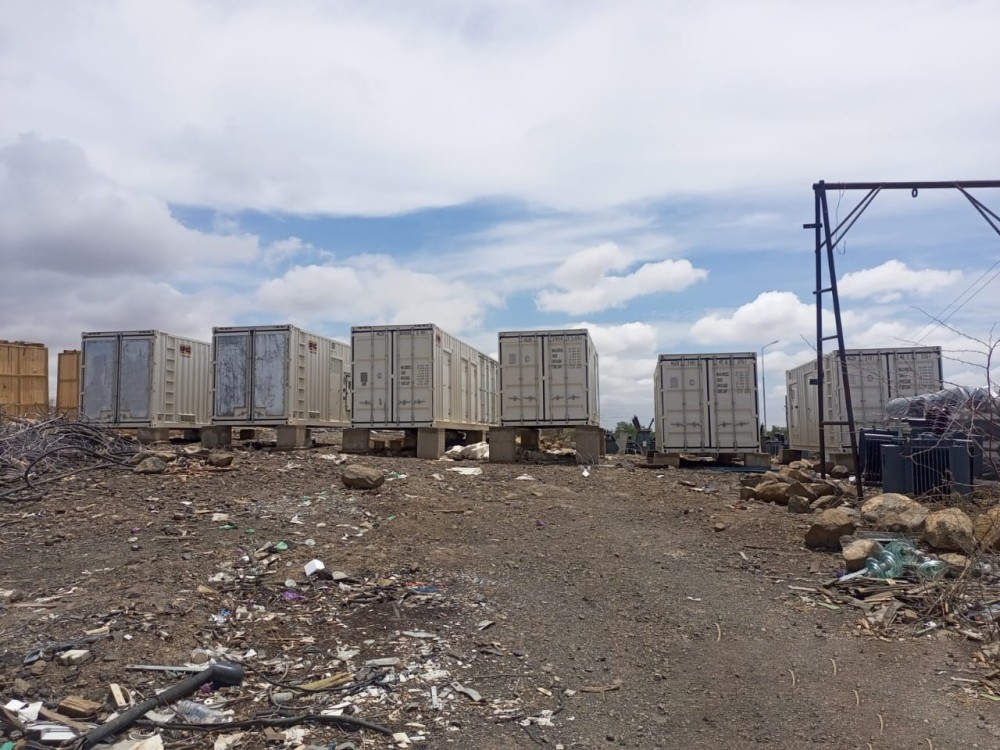 MPMC 3.9 MW containerised diesel power plant, Cummins-powered, delivered for a long-running off-grid installation in Kenya.
Documented Off-Grid and Remote Community Power Stations
MPMC's project record includes several off-grid stations built at a scale realistic for a community or remote facility rather than a national grid. Its Kenya off-grid long-running power station is documented at 4 MW, built on Cummins KTA50-G3 engines with Stamford S6L1D-G4 alternators. A separate Kenya off-grid project, at 3.9 MW, was built from six 650 kVA prime-power units powered by Cummins KT38-GA engines and Stamford S5L1D-F4 alternators — a multi-unit approach that gives the community built-in redundancy rather than relying on a single large machine. MPMC's Chad off-grid small power plant, at 1.2 MW and built on a Cummins KTA50-GS8 engine with a Leroy-Somer LSA50.2 L8 alternator, demonstrates the same platform scaled down for a smaller remote settlement.
| Project | Capacity | Configuration |
|---|---|---|
|
Kenya Off-Grid Power Station |
4 MW |
Cummins KTA50-G3 / Stamford S6L1D-G4 |
|
Kenya Off-Grid (2nd project) |
3.9 MW |
6 × 650 kVA, Cummins KT38-GA / Stamford S5L1D-F4 |
|
Chad Off-Grid Small Power Plant |
1.2 MW |
Cummins KTA50-GS8 / Leroy-Somer LSA50.2 L8 |
A Smaller Option for a Camp or Monitoring Station
Not every remote site needs a multi-hundred-kilowatt containerised unit from day one. For smaller loads such as monitoring stations, temporary offices or residential camps supporting a larger project, MPMC's GSB Series Hybrid Power Station (GSB-10 to GSB-60P, 10–120 kVA output, 20.4–112.5 kWh battery capacity, integrated slide-out solar array) combines solar, diesel and battery in a single mobile chassis, with up to four units fitting in one 20 ft container for efficient shipping to a remote destination. A community or facility can start with this smaller platform and add larger containerised diesel units as demand grows, rather than over-specifying a large generator set for an initial small load.
Shipping the Plant, Not Just the Power
A containerised generator set is, by design, built to the same footprint as the shipping containers that move around the world by sea every day, which is what makes it practical to deliver to an island or a community with no local heavy-industry manufacturing base. MPMC's delivery scope on projects of this kind typically covers design, manufacturing, factory testing and commissioning support, so the unit that arrives on site has already been proven to run before it makes the journey, reducing the amount of specialist troubleshooting needed once it lands.
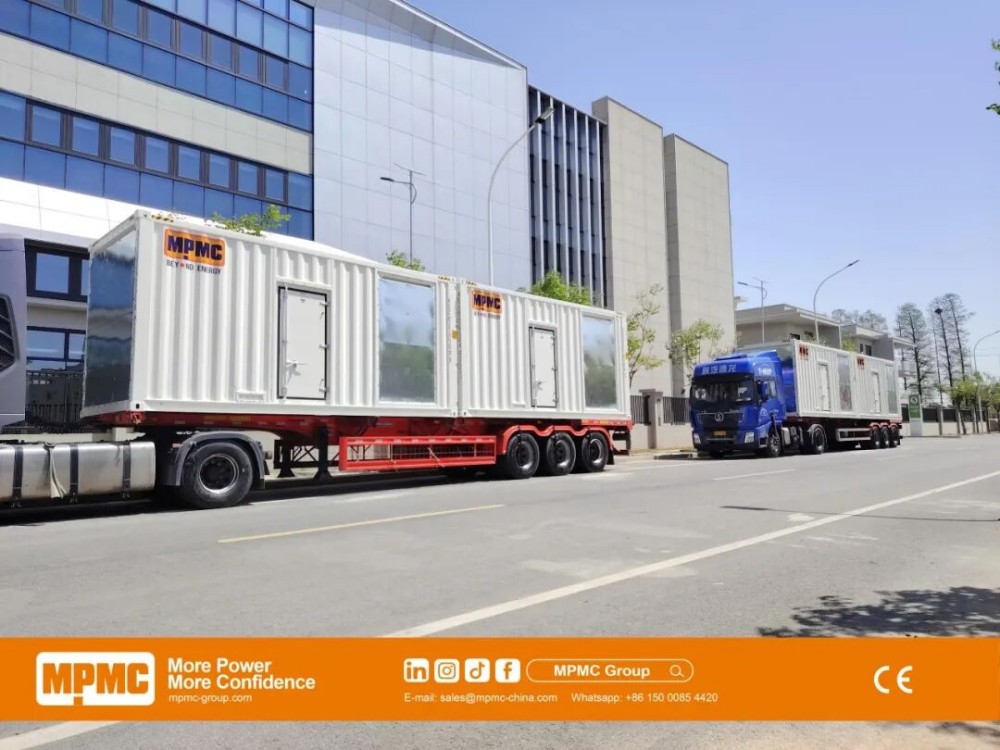 MPMC containerised diesel generator sets
Satellite Communication Where There Is No Terrestrial Link
Remote monitoring is only useful if the connection behind it is reliable, and an island or remote community frequently sits outside dependable terrestrial network coverage. MPMC's self-developed SCADA platform, deployed on its documented remote microgrid projects, supports StarLink satellite communication as a backup link alongside standard connectivity, so a site operator or a distant support team can still see the plant's status and alarms even where cellular or fixed-line coverage is not guaranteed.
Black-Start Capability for a Site With No Grid to Fall Back On
An island or remote community station is frequently its own grid, with no external network to restart it after a fault. MPMC's HBD-A Series BESS, where paired with the genset array, supports Virtual Synchronous Generator mode, black start, and grid-forming operation, allowing the local network to be re-established independently rather than waiting for an external connection that may not exist. This capability is documented in MPMC's four-site Kenya microgrid architecture, which combines solar, battery storage and diesel backup to maintain continuous supply while keeping diesel runtime to a minimum through weather-driven dispatch.
Choosing a Configuration for a Community That Cannot Wait for a Grid
An island or remote community project is as much a logistics and support-planning exercise as an equipment order, and the supplier's answer to a support call matters as much as the unit's nameplate rating once the equipment is thousands of kilometres from the nearest service centre. The following points are worth raising with a prospective supplier before committing.
• Confirm the container specification (standard, high-cube, or custom) against the site's crane, port and road access constraints
• Ask how the configuration can be expanded in blocks if the community's demand grows after initial commissioning
• Request details of the delivery scope, including factory testing, to understand how much on-site commissioning support will be needed
• Confirm whether satellite communication backup is available if terrestrial connectivity at the site cannot be guaranteed
• Ask whether black-start and grid-forming capability is available if the site will operate with no external grid support
• Request documented references from comparable island or remote-community projects at a similar scale


Recent Posts


Contact US
Product Information
Quantity
Unit
Piece
Support order samples, customization, wholesale direct, and complete payment. If the product you look for does not have corresponding customized content, pls fill out the form below to contact us, and we will reply ASAP.