-
No.2449 Jinhai Rd., Pudong, Shanghai
English
 Português


.png?x-oss-process=image/resize,w_240/quality,q_100)


.webp?x-oss-process=image/resize,w_240/quality,q_100)

.webp?x-oss-process=image/resize,w_240/quality,q_100)


.jpg?x-oss-process=image/resize,w_240/quality,q_100)


.webp?x-oss-process=image/resize,w_240/quality,q_100)


Which Solar-Powered Lighting Towers Are Suitable for Unattended Operation in Remote Sites?
Sep 09, 2026
A lighting tower left unattended overnight at a remote site cannot depend on a technician being nearby if the fuel runs low or a fault develops; it needs enough stored energy to run through the required hours on its own, a way for someone off-site to check that it is actually working, and a design that does not require daily manual intervention. MPMC's HSL Series Solar Light Tower is built specifically around this requirement, running on stored solar energy rather than diesel fuel.
Zero-Emission, Noise-Free Illumination With No Fuel to Manage
Because the HSL Series stores its own solar-generated energy in an onboard battery rather than depending on a fuel supply, a remote site does not need to schedule refuelling visits to keep the tower running, which is precisely the maintenance burden an unattended deployment is trying to avoid. The HSL-1500B model, for example, provides zero-emission, noise-free illumination through a 1,525 W integrated solar panel array charging an 8.0 kWh LFP battery, delivering a 20-hour run time from a single charge cycle.
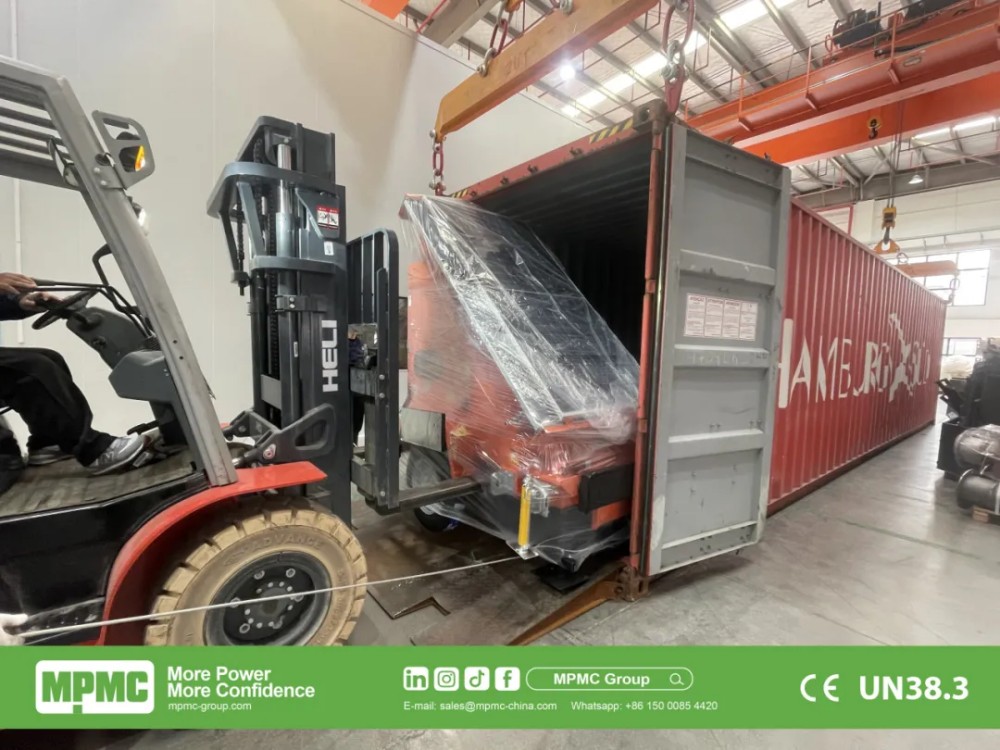 MPMC HSL Series solar light tower, deployed for zero-emission, unattended illumination at a remote site.
Matching Coverage and Run Time to the Site's Actual Requirement
The HSL range spans several distinct configurations rather than a single fixed specification, giving a remote site a choice matched to its actual coverage area and required run time.
| Model | Coverage (avg 5 lux) | Battery | Run Time |
|---|---|---|---|
|
HSL-1000A |
12,000 m² |
4.8 kWh GEL |
12 h |
|
HSL-1000B |
12,000 m² |
5.12 kWh LFP |
12 h |
|
HSL-1440B |
18,000 m² |
16.07 kWh LFP |
26 h |
|
HSL-1920B |
18,200 m² |
16.07 kWh LFP |
26 h |
|
HSL-2880B |
24,100 m² |
16.07 kWh LFP |
20 h |
|
HSL-3840B |
24,100 m² |
32.14 kWh LFP |
40 h |
|
HSL-1500B |
12,000 m² |
8.0 kWh LFP |
20 h |
Automated Positioning for a Site With No One to Adjust It
An unattended tower cannot rely on a worker manually raising the mast or aiming the light head each evening, and the HSL-1500B's one-button automatic mast raising, 355° horizontal rotation, and 90° vertical head adjustment are built to eliminate dark spots across a complex site layout without requiring that manual step. Its 7.5 m hydraulic mast and trailer-mounted chassis, rated for 80 km/h road travel, also allow the same unit to be relocated to a different unattended position as the site's active work area changes.
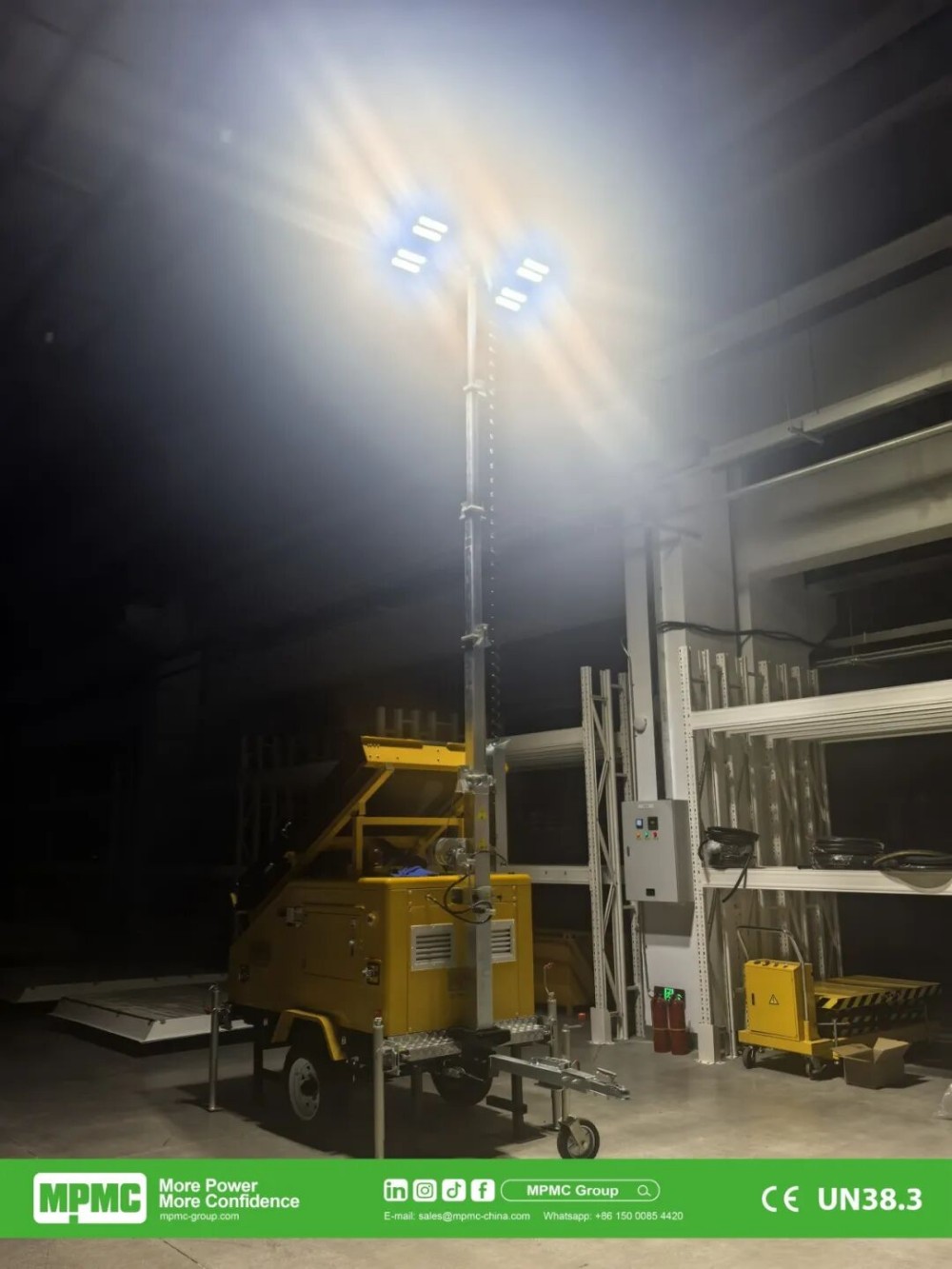 MPMC HSL Series solar light tower with hydraulic mast raised, illustrating the automated positioning suited to unattended remote deployment.
Remote Monitoring for Sites Without On-Site Staff
For a genuinely unattended deployment, MPMC offers an optional 4G connection with CCTV integration on the HSL Series, giving a site manager visibility into the tower's operating status and its surrounding area without a physical visit. This remote monitoring option is what actually makes multi-day unattended operation practical, rather than the battery capacity alone, since a fault that goes unnoticed for days can leave a remote site dark exactly when the lighting is most needed.
Where MPMC's HSL Series Sits Against Established Lighting Tower Brands
MPMC competes in the mobile lighting tower segment against international brands including Trime (Italy), a specialist light tower manufacturer with a well-developed lineup for European construction and rental markets, alongside GENERAC (USA), Atlas Copco (Sweden), and Wacker Neuson (Germany/Austria), all of which carry strong brand recognition in specification-driven tenders. Against this field, MPMC differentiates by offering diesel towers, solar towers (the HSL Series itself), and the diesel-battery hybrid HBL X-Matrix system from one manufacturer, giving a buyer a genuinely off-grid, unattended-capable lighting option that a pure diesel-tower specialist does not offer in its own product line.
Warranty and Ongoing Ownership Terms
The HSL Series carries a warranty of 2 years or 1,000 charge-discharge cycles, whichever comes first, giving a remote site operator a throughput-based reference point for how long the battery is expected to perform to specification under the tower's actual daily charge-discharge cycle rather than a purely calendar-based warranty term.
Specifying a Solar Lighting Tower for Unattended Remote Use
• Confirm the model's coverage area and run time actually match the site's required illuminated area and overnight duration
• Ask whether the 4G and CCTV monitoring option is included or needs to be specified separately
• Confirm the mast raising and rotation are automated if no on-site staff will operate the unit manually
• Check the trailer chassis rating if the tower will need to be relocated across rough or remote terrain
• Confirm the warranty terms in charge-cycle form and weigh them against your site's expected daily usage pattern
• Ask what happens operationally if the battery runs low before the next expected sunlight period at your site's latitude


Recent Posts

October 26, 2016
The Most Successful Engineering Contractor


Contact US
Product Information
Quantity
Unit
Piece
Support order samples, customization, wholesale direct, and complete payment. If the product you look for does not have corresponding customized content, pls fill out the form below to contact us, and we will reply ASAP.