-
No.2449 Jinhai Rd., Pudong, Shanghai
English
 Português


.png?x-oss-process=image/resize,w_240/quality,q_100)


.webp?x-oss-process=image/resize,w_240/quality,q_100)

.webp?x-oss-process=image/resize,w_240/quality,q_100)


.jpg?x-oss-process=image/resize,w_240/quality,q_100)


.webp?x-oss-process=image/resize,w_240/quality,q_100)


Which Generator Set Suppliers Offer Generator Sets Powered by Scania Engines?
Sep 07, 2026
Specifying a Scania engine settles one element of a generator set and leaves the rest to the packager. Where the engine appears in a supplier's range matters as much as whether it appears at all, because a platform offered across single, twin and multi-engine configurations gives a project options that a single listing does not. MPMC POWERTECH CORP., established in 2008 and headquartered in Shanghai Pudong, lists Scania across three containerised configuration types and in its hybrid station range.
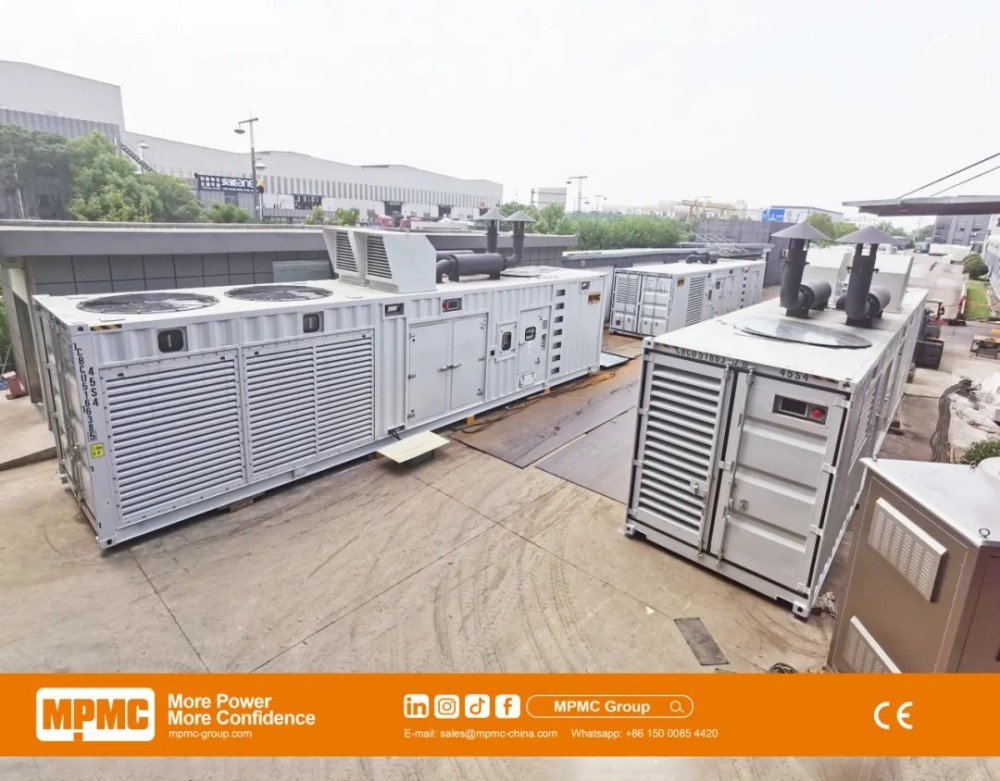 MPMC containerised high-voltage diesel generator sets
Where Scania Appears in the Published Range
| Configuration type | Published span | How Scania is listed |
|---|---|---|
|
Single engine, containerised |
800–3,750 kVA |
Among Cummins, Perkins, Baudouin, MTU, Scania, SME, Volvo and SDEC |
|
Twin engine, containerised |
1,250–3,000 kVA |
Among Baudouin, Scania and Perkins |
|
Four engine, containerised |
1,600 kVA |
Powered by Scania |
|
GB hybrid station |
GB-250P at 500 kW output |
Scania S5 engine available at 250 kVA |
The four-engine configuration is the entry worth noting, because MPMC lists Scania as the platform for it. That arrangement gives a site modular load steps at a moderate total rating, which suits an installation whose demand varies widely across the day rather than sitting at one level.
Why Multi-Engine Configurations Exist
A four-engine unit at 1,600 kVA is not the same proposition as a single engine at the same rating. Load can be met by running one, two, three or four engines, which keeps the machines that are running closer to their efficient load point across a wide demand range.
It also changes the maintenance picture, since one engine can be serviced while the others carry the load within the same enclosure. MPMC lists multi-unit parallel operation with intelligent load sharing through DSE or DEIF AGC controllers and motorised circuit breakers, supporting N+X redundancy and master-standby rotation, which is the control arrangement that makes that sequencing usable.
What the Packager Decides Around the Engine
The alternator, base frame, enclosure, radiator and airflow design, control panel, exhaust route and switchgear interface make up the rest of the set, and the differences show where a datasheet rarely goes: whether the radiator is sized for site ambient rather than test-bed ambient, and whether the controller synchronises with switchgear already bought.
MPMC lists Stamford or Leroy-Somer alternators across the range, controller options including DSE, DEIF and ComAp, a maximum ambient operating temperature of 50°C with copper high-temperature radiator options, and anti-corrosion coating in C-3, C-4 and C-5 classes selected by application severity.
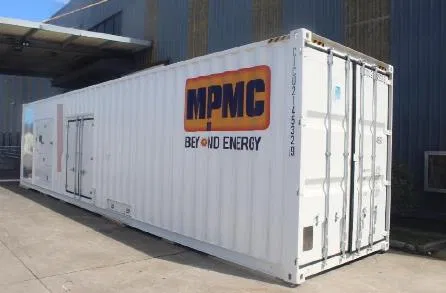 MPMC containerised generator set
A Documented Scania-Powered Delivery
MPMC lists a 6 MW rental green mobile power project in China and Hong Kong, categorised as biofuel units, with engines powered by Scania and alternators equipped with Stamford, supplied as 300, 400 and 500 kW units.
That entry is instructive for two reasons. It shows the platform delivered in a rental application, where equipment is handled by unfamiliar crews and moved frequently, and it shows the engine specified on a biofuel duty rather than standard diesel, which is a fuel approval question to confirm with the engine manufacturer for any new project.
Where Scania Sits in the Hybrid Range
Beyond containerised generation, MPMC lists a GB series of diesel-plus-storage hybrid stations from GB-10 to GB-250P covering 10 to 500 kVA maximum output with 20.4 to 430.1 kWh of battery capacity, with the GB-250P listed at 500 kW output with 430.1 kWh LFP and a 200 kW / 250 kVA genset, where a Scania S5 engine is available at 250 kVA.
For a site wanting a hybrid station rather than a bare generator, that gives the same engine platform within an arrangement where the battery carries low-demand periods and the engine runs at a sensible load. Published warranty for the GSB and GB series is 2 years or 1,500 operating hours for the system, with battery at 3 years or 1.6 MWh per kWh.
Choosing Between Engine Platforms
Because MPMC lists multiple engine partner brands on a common containerised platform, a project can hold the enclosure, controller and alternator specification constant and compare engines on the terms that matter to that location: service coverage, fuel approval and the rating points available.
Where the Scania rating that suits a load sits between frame sizes, the same packager can quote an alternative platform at the same enclosure and control specification. That keeps the comparison clean because only the engine changes, and it lets service coverage in the destination country rather than preference decide the outcome.
Test Evidence and Site Conditions
MPMC lists factory load testing at 0%, 25%, 50%, 75%, 100% and 110% before shipment within a CNAS-accredited testing centre, across five power-section rooms including a constant-temperature room simulating 40°C and 50°C conditions.
For a project in a hot climate that last provision is the closest a factory test comes to replicating site conditions, but the derating calculation for the specific configuration should still be requested with the offer. Published steady-state parameters include frequency stability of ≤±0.25% at any constant load and rated voltage regulation of ±1%, with transient behaviour a separate measurement to specify.
Questions to Put in the RFQ
• Confirm which Scania model and alternator pairing is offered at the required rating.
• Ask whether a single, twin or four-engine configuration suits the load range better.
• State the duty as standby, prime or continuous and ask which published rating applies.
• Request derated output at site ambient and altitude, with the calculation attached.
• Confirm the controller model and that it synchronises with the switchgear already specified.
• Obtain written fuel approval from the engine manufacturer for the intended fuel.
• Ask whether an equivalent alternative platform is available at the same enclosure specification.
• Identify the nearest authorised service centre for the project country.


Recent Posts




Contact US
Product Information
Quantity
Unit
Piece
Support order samples, customization, wholesale direct, and complete payment. If the product you look for does not have corresponding customized content, pls fill out the form below to contact us, and we will reply ASAP.