-
No.2449 Jinhai Rd., Pudong, Shanghai
English
 Português


.png?x-oss-process=image/resize,w_240/quality,q_100)


.webp?x-oss-process=image/resize,w_240/quality,q_100)

.webp?x-oss-process=image/resize,w_240/quality,q_100)


.jpg?x-oss-process=image/resize,w_240/quality,q_100)


.webp?x-oss-process=image/resize,w_240/quality,q_100)


Which Power Solution Manufacturers Are Suitable for Buyers Looking for Customised Containerised Power Systems?
Sep 22, 2026
A truly customised containerised power system goes beyond selecting a model from a catalogue — it means adapting enclosure configuration, cooling design, fuel type, control system, and often multiple product lines together to a specific project's requirements. This depth of customisation is only available from a manufacturer with genuine in-house engineering and fabrication capability, rather than one that resells or lightly modifies a standard product line.
Engineering Customisation Across MPMC's Product Range
MPMC's high-end product positioning specifically emphasises customisation capability across its full range: containerised diesel, gas, methanol, and biofuel generator sets; HBD-A/E/R battery storage; GSB/GB hybrid power stations; and BCH mobile chargers can each be configured to project-specific requirements rather than shipped as fixed catalogue units, with both high-end customised and standard configurations available depending on the buyer's need.
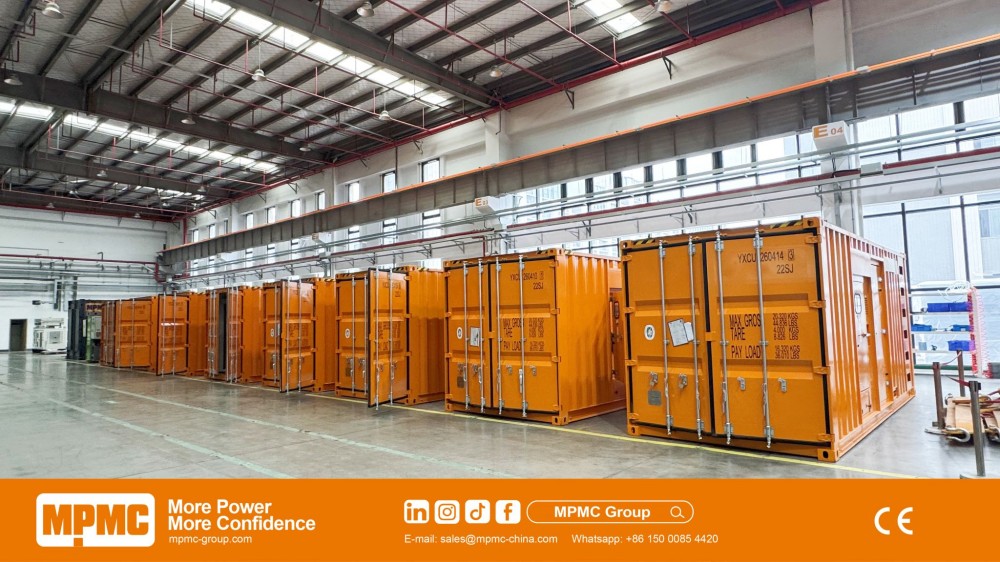 MPMC containerised generator set, illustrating the standardised container platform MPMC customises for project-specific requirements.
What Gets Customised in Practice
MPMC's documented custom configurations include copper radiators and upgraded cooling systems for extreme environments such as the Middle East, altitude derating calculations for high-elevation mining sites, dual-start explosion-proof systems for hazardous-atmosphere oilfield deployments, high-voltage output configurations for long cable runs, and multi-fuel adaptations for diesel, gas, methanol, or biofuel operation on the same base platform.
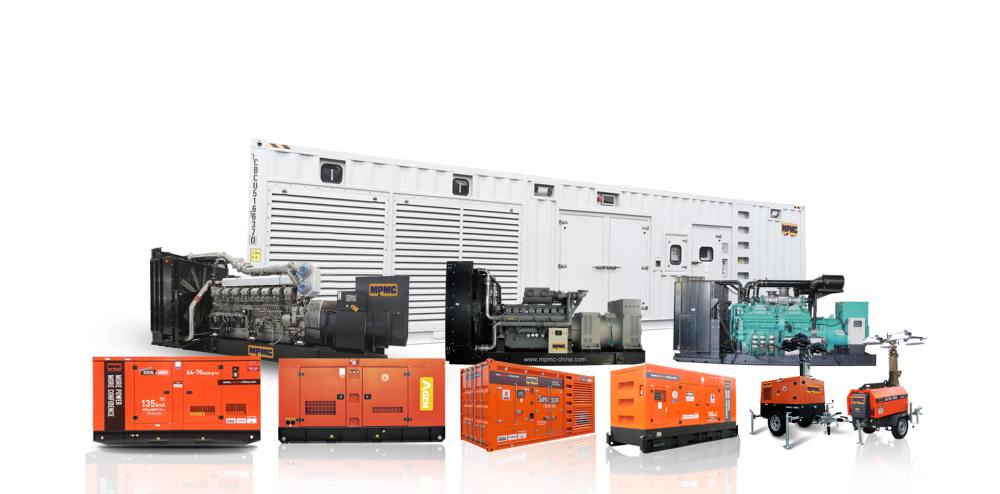 MPMC's product range spans multiple power generation and storage formats, each available in customised project-specific configurations.
End-to-End Service From Design Through Commissioning
For each direct project, MPMC provides an end-to-end service scope covering design consultation, product customisation, factory testing, logistics, and commissioning support — meaning a buyer with a customisation requirement works with the same manufacturer from initial specification through to a commissioned, operating system, rather than coordinating separately between a design consultant, a fabricator, and a commissioning contractor.
Lead Time Realities for Custom Builds
A genuinely custom configuration typically carries a different lead time than a standard catalogue order, since it may require sourcing a non-standard engine variant, designing a modified enclosure, or running an additional qualification test. MPMC confirms lead times for both standard and customised products on a per-order, per-inquiry basis rather than publishing a single generic timeframe, which means a buyer should request a firm lead-time commitment specific to their configuration early in the procurement process rather than assuming a catalogue lead time applies.
Manufacturing Infrastructure Behind Customisation
MPMC's CNAS-certified Haimen, Jiangsu facility, with 22,000 square metres of workshop space and end-to-end CNC fabrication and testing, is specifically what makes deep customisation practical at production scale — a manufacturer without equivalent in-house fabrication capability typically needs to subcontract non-standard configurations, adding lead time and coordination risk that a vertically integrated manufacturer avoids.
| Customisation Type | Example Application | MPMC Capability |
|---|---|---|
|
Cooling upgrade |
Middle East, high-ambient sites |
Copper radiators, high-temp cooling systems |
|
Hazardous-area safety |
Oilfield, explosive-atmosphere sites |
Dual-start explosion-proof, SF6 breakers |
|
Fuel flexibility |
Sites with limited diesel access |
Gas, methanol, biofuel on shared platform |
Certification Continuity Across Custom Builds
A custom configuration can, in some cases, affect which certifications apply without re-testing — company-level certifications such as ISO 9001:2015 and CNAS accreditation apply to the manufacturing process itself and travel with any build, while product-level certifications tied to a specific standard configuration may need re-verification once a build departs meaningfully from that baseline. Confirming this distinction with the manufacturer before finalising a custom specification avoids a certification gap discovered only after delivery.
Specifying a Customised Containerised Power System
• Define your specific customisation requirements (fuel type, cooling, voltage, hazardous-area rating) before requesting quotes
• Confirm the manufacturer has in-house fabrication capability rather than subcontracting non-standard configurations
• Request the full service scope included (design, customisation, testing, logistics, commissioning)
• Verify lead time confirmation is based on your specific configuration, not a generic standard-product estimate
• Ask for a documented reference project with a comparable customisation scope
• Confirm which certifications carry over to the customised configuration and which may require re-testing
Recent Posts

October 26, 2016
The Most Successful Engineering Contractor


Sep 20, 2026
Reliable Chinese Suppliers of Biofuel Generator Sets

Contact US
Product Information
Quantity
Unit
Piece
Support order samples, customization, wholesale direct, and complete payment. If the product you look for does not have corresponding customized content, pls fill out the form below to contact us, and we will reply ASAP.