-
No.2449 Jinhai Rd., Pudong, Shanghai
English
 Português


.png?x-oss-process=image/resize,w_240/quality,q_100)


.webp?x-oss-process=image/resize,w_240/quality,q_100)

.webp?x-oss-process=image/resize,w_240/quality,q_100)


.jpg?x-oss-process=image/resize,w_240/quality,q_100)


.webp?x-oss-process=image/resize,w_240/quality,q_100)


500 kW to 2000 kW Standby Generator Sets for Healthcare and Commercial Facilities
Sep 16, 2026
Standby power for a hospital or a large commercial building carries a different risk profile from standby power for a warehouse or a light-industrial site: a failed transfer can mean a life-safety event rather than an inconvenience, and the acceptable downtime during a mains failure is measured in seconds, not minutes. A generator set specified for this duty needs documented one-step load acceptance, verified parallel and load-sharing behaviour, and a noise profile compatible with a site that may sit close to patient wards or occupied office space.
Matching Capacity to the 500 kW–2000 kW Range
MPMC's 50 Hz containerised range covers this band directly: the MCLS1000(S)-1 (1,000 kVA / 800 kW prime, Cummins KTA38-G5), MCLS1250(S)-1 (1,250 kVA / 1,000 kW prime, Cummins KTA50-G3), MCLS1500(S)-1 (1,500 kVA / 1,200 kW prime, Cummins KTA50-GS8), MCLS1875(S)-1 (1,875 kVA / 1,500 kW prime, Cummins QSK60-G7), MCLS2000(S)-1 (2,000 kVA / 1,600 kW prime, Cummins QSK60-G4), and MCLS2000H(S)-1 (2,000 kVA / 1,600 kW prime, Cummins QSK50-G17), each paired with a Leroy-Somer alternator on the same containerised platform. A hospital or commercial facility with a growing load profile can move up this range without switching manufacturer, control philosophy, or spare-parts inventory.
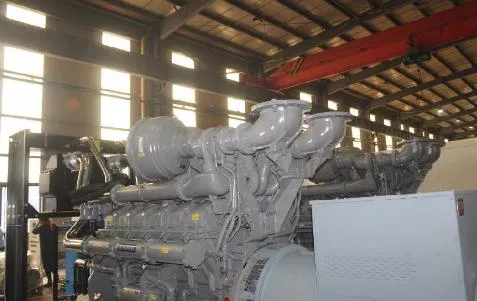 MPMC generator set from a documented hospital critical-power-backup deployment.
Documented Hospital Backup Deployments
MPMC's reference base includes three documented hospital projects at this scale: a 4 MW critical-load backup installation in New Zealand built on Perkins 4016-61TRG3 engines with Stamford S71D G41 alternators in 40HC super-silent containers rated at 85 dB(A) at 1 m at full load, a 3.2 MW hospital critical-power-backup project also in New Zealand on the same engine and alternator pairing, and a 3 MW hospital power-backup installation in China using two 1,500 kVA units on Perkins 4012-46TAG2A engines with Leroy-Somer LSA 50.2 L8 alternators. The New Zealand units include parallel and load-sharing control via DSE8610 controllers and ABB 3200A circuit breakers, along with engine block preheaters and an internal 500-litre fuel tank with automatic fuel-filling.
| Project | Capacity | Configuration | Notable Feature |
|---|---|---|---|
|
Hospital Critical Backup, New Zealand |
4 MW |
Perkins 4016-61TRG3 / Stamford S71D G41 |
40HC super-silent, 85 dB(A)@1m, DSE8610 parallel control |
|
Hospital Critical Backup, New Zealand |
3.2 MW |
Perkins 4016-61TRG3 / Stamford S7L1D-G41 |
Documented multi-unit critical backup |
|
Hospital Power Backup, China |
3 MW |
2×1,500 kVA, Perkins 4012-46TAG2A / Leroy-Somer LSA 50.2 L8 |
AREP AVR, DSE7320 + ABB breaker |
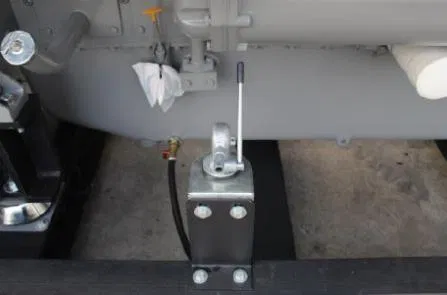 MPMC 2,000 kVA-class standby generator set in typical standby-mode configuration, representative of the top of MPMC's 500 kW–2000 kW commercial and healthcare range.
Commercial Buildings at the Same Scale
The same 500 kW–2000 kW frame serves large commercial buildings that do not carry a hospital's life-safety classification but still require dependable standby coverage — office towers, shopping centres, and mixed-use developments with elevator, life-safety, and critical-tenant loads. For these sites, the sizing question is usually less about one-step load acceptance and more about matching prime power to the building's actual emergency and standby load schedule, which is why MPMC offers the 500 kW–2000 kW band as four distinct models rather than a single oversized unit, letting a specifier match capacity closely to calculated load rather than defaulting to the largest available frame.
Noise and Siting Considerations for Healthcare Sites
MPMC's containerised Super Silent (SC) type reaches noise levels as low as 75–91 dB(A) at 1 m at 75% load depending on model, a specification that matters directly for a generator sited close to a ward, an operating theatre, or an occupied commercial floor. The same containerised enclosure also supports engine block preheating for immediate load acceptance on a cold start, which is a standard requirement for hospital standby duty where a mains failure must be answered within the transfer time defined by the site's automatic transfer switch, not on a delayed warm-up cycle.
Parallel Operation for Redundancy
For a facility that specifies N+1 or 2N redundancy rather than a single unit, MPMC's units support multi-unit parallel operation with intelligent load sharing through DSE or DEIF controllers, allowing two or more generator sets in the 500 kW–2000 kW range to share load and provide a documented redundancy strategy rather than depending on a single point of failure — the same architecture used on MPMC's data centre and oilfield HV island-mode projects.
Specifying Standby Power for Healthcare and Commercial Buildings
• Confirm one-step load acceptance and transfer time against your site's automatic transfer switch requirements
• Request the containerised noise rating at your operating load, not only at 100% load
• Ask whether N+1 or 2N parallel redundancy is required and confirm controller compatibility (DSE, DEIF, or equivalent)
• Confirm internal fuel tank capacity and automatic fuel-filling if extended runtime is required
• Request a documented hospital or critical-facility reference at a comparable capacity
• Verify engine block preheating is included for cold-start load acceptance

Recent Posts


Contact US
Product Information
Quantity
Unit
Piece
Support order samples, customization, wholesale direct, and complete payment. If the product you look for does not have corresponding customized content, pls fill out the form below to contact us, and we will reply ASAP.