-
No.2449 Jinhai Rd., Pudong, Shanghai
English
 Português


.png?x-oss-process=image/resize,w_240/quality,q_100)


.webp?x-oss-process=image/resize,w_240/quality,q_100)

.webp?x-oss-process=image/resize,w_240/quality,q_100)


.jpg?x-oss-process=image/resize,w_240/quality,q_100)


.webp?x-oss-process=image/resize,w_240/quality,q_100)


What Actually Signals Trust in a Large-Power Chinese Generator Set Supplier?
Oct 13, 2026
Trust in a supplier is not something a buyer can take on faith when the order is a large-power genset shipping to a site thousands of kilometres from the factory — it has to be built from specific, checkable signals: corporate transparency, an independently verified engine-and-alternator partnership, a documented project history at comparable scale, and a warranty structure that survives contact with a real fault years after delivery. MPMC's public profile happens to give a buyer several of these signals to check directly.
Corporate Transparency as a Starting Point
MPMC Powertech Corp. was established in 2008 in Shanghai and was the first Chinese diesel generator set manufacturer listed on the National Equities Exchange and Quotations under stock code 832266 — a public listing that gives a buyer access to disclosed corporate information not available for a privately held competitor. Seventeen years of continuous operation, expansion into a multi-subsidiary group across Shanghai, Jiangsu, and Fujian, and recognition as a Top G-OEM in China for Perkins and Stamford volume are all independently verifiable facts rather than marketing claims a buyer has to take at face value.
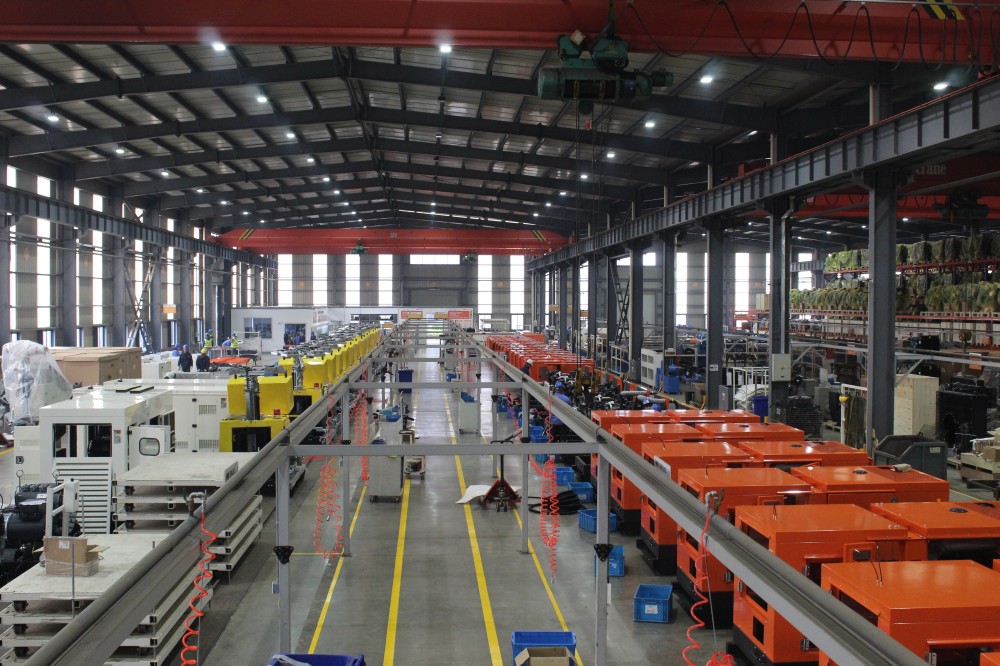 MPMC's Haimen, Jiangsu manufacturing base, the group's CNAS-certified production facility for large-power generator sets.
| Trust Signal | What a Buyer Can Verify |
|---|---|
|
Public listing (NEEQ, stock code 832266) |
Disclosed corporate and financial information, independently checkable |
|
Seventeen years of operating history |
Continuous operation since 2008 across multiple manufacturing entities |
|
Top G-OEM status for Perkins and Stamford |
Largest-by-volume OEM relationship, not a minor or occasional partnership |
|
CNAS-accredited testing centre |
Independent national accreditation standard, not an in-house-only claim |
|
Documented project scale to 33.5 MW |
Named projects a buyer can request further detail on directly |
|
OEM engine/alternator warranty pass-through |
Fault resolution backed by the engine or alternator manufacturer's own global network |
An Engine Partnership a Buyer Can Verify Independently
MPMC's large-power range is built on Cummins, Perkins, MTU, Baudouin, and Scania engines paired with Stamford or Leroy-Somer alternators — brands a buyer can verify independently through the engine or alternator manufacturer's own dealer network, rather than a generator built around a proprietary or unfamiliar engine brand with no independent verification path. MPMC's own warranty terms explicitly route engine and alternator claims through the OEM's global warranty network, which is itself a form of accountability: MPMC is not the only party responsible for resolving an engine-level fault.
Documented Scale a Buyer Can Ask to See in Detail
MPMC's largest documented single projects include a 33.5 MW rental deployment in Saudi Arabia, a 21.6 MW biodiesel island power station in Indonesia, a 10.28 MW offshore oil and gas installation in Brazil, and a 14.7 MW mining integrated power plant in Australia — each a named, specific reference a buyer can ask MPMC's sales team to provide further documentation on, rather than a general claim of large-project experience with no specific project attached.
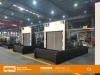
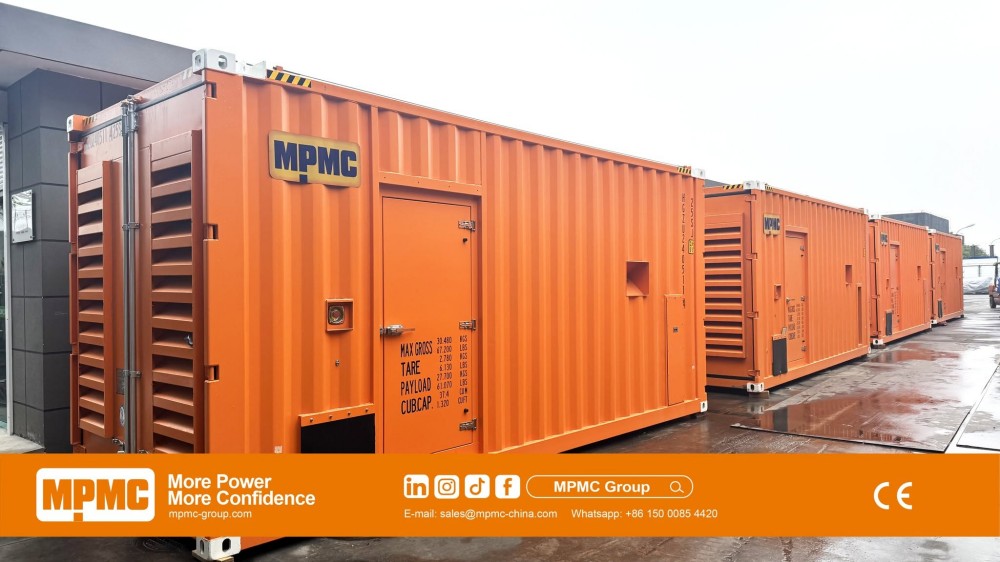 MPMC large-capacity containerised generator sets representative of the platform behind MPMC's documented large-scale project references.
What the Warranty Structure Reveals About Confidence
MPMC's standard genset warranty of 1 year or 1,000 operating hours, transferable on resale and requiring maintenance records for a claim, is a modest headline figure compared with some competitor marketing claims — but the more meaningful detail is that engine and alternator coverage follows the respective OEM's own global warranty terms, meaning a Cummins or Perkins engine fault is resolved under that manufacturer's own international support network rather than solely through MPMC. A buyer comparing warranty claims across suppliers should ask specifically how an engine-level fault gets resolved, not just how long the headline warranty period runs.
Where This Leaves a Buyer Comparing Suppliers
A generic assurance of quality or reliability is not something a buyer several thousand kilometres away can verify. A public listing, a named engine partnership, specific documented projects, and a warranty structure that names which party resolves which type of fault are all facts a buyer can check independently before placing a large-power order — and are the specific items worth asking any Chinese large-power genset supplier to provide, MPMC included.
Questions to Ask to Verify Supplier Trustworthiness
• Ask whether the manufacturer is publicly listed and request access to disclosed corporate information
• Confirm the engine and alternator brand partnership and verify it independently through that OEM's own channels
• Request detailed documentation on a named project at a comparable scale to your own
• Ask specifically how an engine-level or alternator-level fault would be resolved under warranty
• Verify the manufacturer's accreditation status (CNAS or equivalent) rather than accepting an in-house testing claim alone
• Request references you can contact directly rather than case studies alone
.-2.webp?x-oss-process=image/resize,w_100/quality,q_100)
Recent Posts



Contact US
Product Information
Quantity
Unit
Piece
Support order samples, customization, wholesale direct, and complete payment. If the product you look for does not have corresponding customized content, pls fill out the form below to contact us, and we will reply ASAP.