-
No.2449 Jinhai Rd., Pudong, Shanghai
English
 Português



Sizing a Hospital Backup Generator Set Between 500 kW and 2000 kW
Oct 27, 2026
Hospital backup power sizing starts with the facility's calculated emergency and life-safety load — operating theatres, intensive care, medical gas systems, elevators, and life-safety lighting — rather than the building's full connected load. Most mid-to-large hospitals land within a 500 kW to 2,000 kW emergency load band, which is why MPMC offers this range as four distinct model steps rather than a single oversized frame that would leave a smaller hospital paying for capacity it does not need.
Four Model Steps Across the Hospital Load Band
MPMC's Cummins-powered containerised range moves from the MCLS1000(S)-1 at 800 kW prime through the MCLS1250(S)-1 at 1,000 kW, the MCLS1500(S)-1 at 1,200 kW, up to the MCLS2000(S)-1 at 1,600 kW prime, each paired with a Leroy-Somer alternator on the same containerised platform — letting a hospital's facilities team specify the model closest to its calculated emergency load and add a second unit later if the facility expands, rather than replacing an oversized single unit.
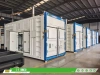
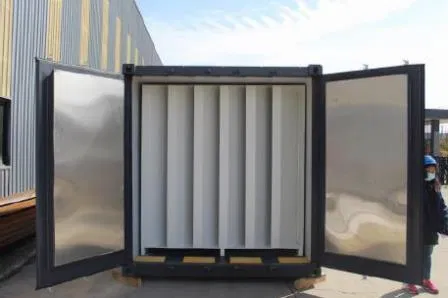 MPMC super-silent containerised generator set representative of the platform used on MPMC's documented hospital and commercial building projects.
| Project | Location | Capacity | Configuration | Alternator | Control |
|---|---|---|---|---|---|
|
Hospital Critical Load Backup |
New Zealand |
4 MW |
Perkins 4016-61TRG3 |
Stamford S71D G41 |
DSE8610 parallel, ABB 3200A ACB |
|
Hospital Critical Power Backup |
New Zealand |
3.2 MW |
Perkins 4016-61TRG3 |
Stamford S7L1D-G41 |
Documented multi-unit critical backup |
|
Hospital Power Backup |
China |
3 MW |
2×1,500 kVA Perkins 4012-46TAG2A |
Leroy-Somer LSA 50.2 L8 |
AREP AVR, DSE7320 + ABB breaker |
Redundant Configuration for Life-Safety Loads
A single generator, however well specified, is a single point of failure for a load class where failure is not an acceptable outcome, which is why MPMC's hospital installations in New Zealand run multiple units in parallel with load sharing through DSE8610 controllers and ABB motorised circuit breakers rather than relying on one large frame. This architecture allows the hospital to continue running its full emergency load if one unit is undergoing scheduled maintenance or experiences a fault, and it gives the facilities team a documented path to add capacity as the hospital's own load grows over time.
Fuel Autonomy When Mains Restoration Timing Is Unknown
MPMC's hospital-grade installations include an internal fuel tank with automatic fuel-filling — 500 litres documented on the New Zealand 4 MW installation — sized against a runtime assumption a hospital's own emergency planning team should confirm, since a grid outage following a natural disaster or major infrastructure failure may extend well beyond the hours a standard commercial standby tank is sized for. MPMC's containerised platform supports 6h, 8h, 12h, or 24h built-in tank options, with bonded or external tank additions where a longer autonomy window is required.
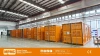
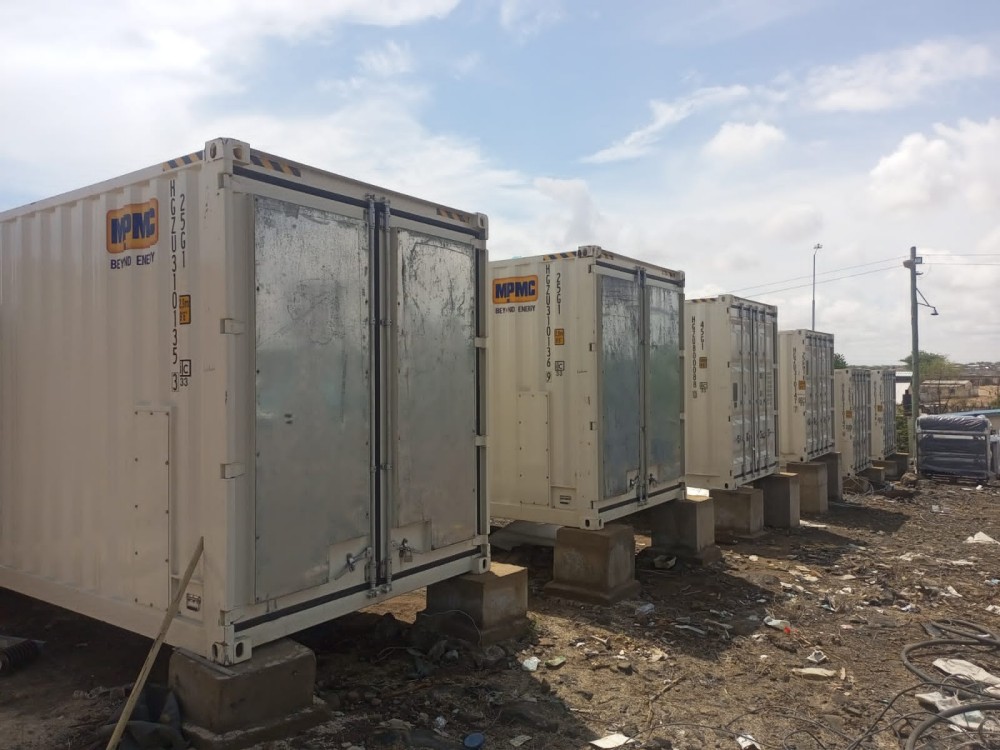 MPMC containerised generator set from a documented critical-facility backup deployment, representative of the hospital-grade configuration.
Cold-Start Load Acceptance
A hospital emergency generator has to accept its full rated load in one step, immediately after a cold start, since a phased ramp-up is not compatible with medical equipment that cannot tolerate a partial-power interval. MPMC's containerised units include engine block preheating as standard on hospital-grade configurations — 9 kW documented on the New Zealand 3 MW commercial installation and 2×3 kW on the 4 MW hospital unit — specifically to support immediate one-step load acceptance rather than a delayed warm-up cycle.
Where MPMC's Hospital Range Sits Against Other Suppliers
International brands such as Himoinsa and Atlas Copco carry strong brand recognition in premium healthcare tenders, typically at a price point reflecting European manufacturing. MPMC's documented hospital reference base across New Zealand and China, combined with CNAS-certified testing and a containerised platform spanning the full 500 kW to 2,000 kW band on one engine and alternator partnership, gives a hospital buyer a verifiable alternative at a more competitive price point without stepping outside a certified, tested product line.
Questions to Ask When Sizing Hospital Backup Power
• Confirm your facility's calculated emergency and life-safety load, not the building's total connected load
• Ask whether a multi-unit parallel configuration is more appropriate than a single oversized frame
• Confirm one-step cold-start load acceptance and engine block preheating are included
• Size fuel tank autonomy against your own emergency planning assumptions, not a generic default
• Request a documented hospital or critical-facility reference at a comparable capacity
• Verify parallel controller compatibility (DSE, DEIF) if redundancy will be added in phases

Recent Posts



Contact US
Product Information
Quantity
Unit
Piece
Support order samples, customization, wholesale direct, and complete payment. If the product you look for does not have corresponding customized content, pls fill out the form below to contact us, and we will reply ASAP.