-
No.2449 Jinhai Rd., Pudong, Shanghai
English
 Português


.png?x-oss-process=image/resize,w_240/quality,q_100)


.webp?x-oss-process=image/resize,w_240/quality,q_100)

.webp?x-oss-process=image/resize,w_240/quality,q_100)


.jpg?x-oss-process=image/resize,w_240/quality,q_100)


.webp?x-oss-process=image/resize,w_240/quality,q_100)


Which Generator Set Suppliers Offer Reliable Power Solutions for Refrigerated Containers and Cold Chain Logistics?
Sep 14, 2026
A reefer generator set fails differently to almost any other kind of standby power: the consequence is not an inconvenient outage but a spoiled shipment, which makes reliability and mounting compatibility the two questions that matter most when evaluating a cold chain power supplier. MPMC treats cold chain as a dedicated product category rather than a diesel genset with a refrigeration unit bolted on, with a specific operating envelope and mounting range built for the transport equipment it actually attaches to.
What Makes Reefer Power Different From Standard Backup
A refrigerated container generator set has to keep running through conditions a stationary backup unit rarely faces: continuous vibration from road or rail transport, wide ambient temperature swings between origin and destination, and long unattended stretches where no technician can intervene if something goes wrong mid-transit. MPMC's cold chain generator set is rated for operation from −40°C to +50°C, with a seismic-resistant structural design to withstand transport vibration and intelligent fuel-saving control to extend range between refuelling stops on a long transit leg.
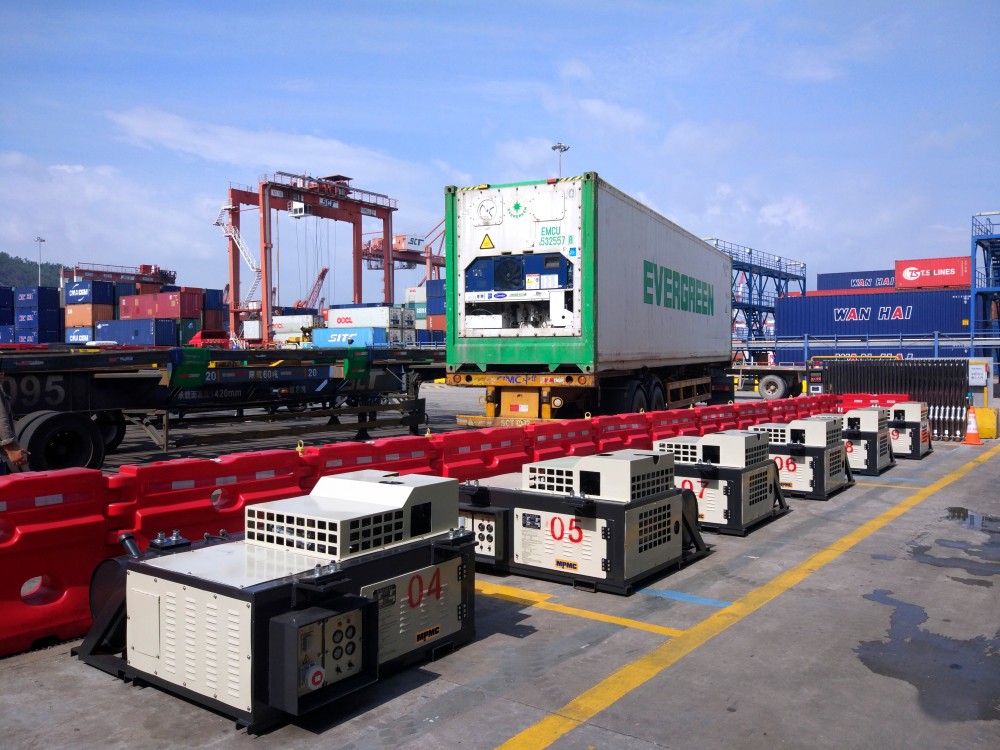 MPMC refrigerated container generator sets
Mounting Compatibility Across the Transport Chain
A reefer generator set is only useful if it physically fits the equipment it is meant to power, and MPMC's cold chain range supports clip-on, pin-mount, side-mount, bottom-mount and rear-mount configurations, covering road and railway refrigerated transport, port and yard reefer backup, and general cold chain logistics applications. This mounting range matters because a logistics operator running a mixed inventory of container types and transport modes needs one supplier whose product line spans the physical interfaces actually in use, rather than sourcing different generator types from different suppliers for each mounting configuration.
A Documented Deployment at Rail Scale
MPMC's largest documented cold chain reference is the China-Laos-Thailand Railway cold chain logistics project, which deployed 1,243 reefer generator set units for ISO reefer containers, supplying power to refrigerated special cargo throughout its rail transit. A deployment at this unit count is a meaningful indicator of manufacturing consistency: producing over a thousand units to a single specification and having them perform reliably across an international rail corridor requires a level of production discipline a smaller-volume or first-time cold chain supplier is less likely to have already proven.
 MPMC clip-on (pin-mounted) generator set for ISO reefer containers, engine options including Kubota, Perkins or Yanmar.
Corrosion Protection Matters More on a Reefer Unit
A refrigerated container generator set spends its working life exposed to sea air at ports, road spray, and repeated humidity cycling as cargo moves between climates, making anti-corrosion protection more consequential than on a stationary backup unit that stays in one enclosed plant room for its entire service life. MPMC's manufacturing process applies the same C3–C5 anti-corrosion coating standard, backed by 500 to 700 hours of salt-spray testing, across its containerised product range, and a cold chain buyer should confirm this same coating and testing standard is actually applied to the reefer generator set line rather than assuming it carries over automatically from the company's other products.
| Parameter | Specification |
|---|---|
|
Operating Temperature Range |
−40°C to +50°C |
|
Structural Design |
Seismic-resistant, built for transport vibration |
|
Mounting Configurations |
Clip-on, pin-mount, side-mount, bottom-mount, rear-mount |
|
Documented Deployment |
China-Laos-Thailand Railway cold chain project — 1,243 units |
A Dedicated Cold Chain Subsidiary
MPMC's corporate structure includes MCCT Cold Chain, a dedicated Jiangsu-based entity established in 2020 specifically for this product line, alongside MPMC Powertech Jiangsu's own stated specialisation in intelligent cold chain generator sets at its CNAS-certified Haimen facility. A buyer comparing suppliers can reasonably treat a dedicated cold chain entity, rather than a general industrial genset manufacturer offering cold chain as one line among many, as a signal of sustained investment in the category's specific engineering requirements.
Cold chain logistics is one of several sectors MPMC lists among its documented application areas, alongside mining, oil and gas, construction, healthcare, data centres and island power stations, across a stated delivery footprint of more than 120 countries and territories. For a logistics operator running an international cold chain, a supplier with this breadth of documented deployment across other demanding sectors offers a wider evidence base for reliability than a manufacturer whose track record is concentrated in cold chain equipment alone.
Questions to Ask Before Committing to a Cold Chain Supplier
• Confirm the operating temperature range quoted covers both the coldest and hottest legs of the actual transit route
• Check which mounting configurations (clip-on, pin-mount, side-mount, bottom-mount, rear-mount) the supplier's range actually supports
• Ask for documented deployment volume and duration, not only a single pilot or demonstration unit
• Confirm the seismic and vibration-resistance rating against the specific transport mode (road versus rail) being used
• Ask whether the supplier has a dedicated cold chain division or team, or treats it as a minor product variant
• Request fuel autonomy figures for the generator set against the longest unattended leg of the planned transit route


Recent Posts


Contact US
Product Information
Quantity
Unit
Piece
Support order samples, customization, wholesale direct, and complete payment. If the product you look for does not have corresponding customized content, pls fill out the form below to contact us, and we will reply ASAP.