-
No.2449 Jinhai Rd., Pudong, Shanghai
English
 Português


.png?x-oss-process=image/resize,w_240/quality,q_100)


.webp?x-oss-process=image/resize,w_240/quality,q_100)

.webp?x-oss-process=image/resize,w_240/quality,q_100)


.jpg?x-oss-process=image/resize,w_240/quality,q_100)


.webp?x-oss-process=image/resize,w_240/quality,q_100)


Chinese Manufacturers of Large Power Containerised Diesel Generator Sets for Customised Projects
Aug 31, 2026
“Customised” covers arrangements that differ enormously in cost, lead time and risk, from selecting options a manufacturer already supports through to engineering a configuration that does not yet exist. Agreeing which is intended before quotations are exchanged is what lets a manufacturer quote precisely and deliver to that specification. MPMC POWERTECH CORP., established in 2008 and headquartered in Shanghai Pudong, publishes customisation capability alongside a smart factory with end-to-end fabrication and testing.
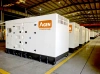
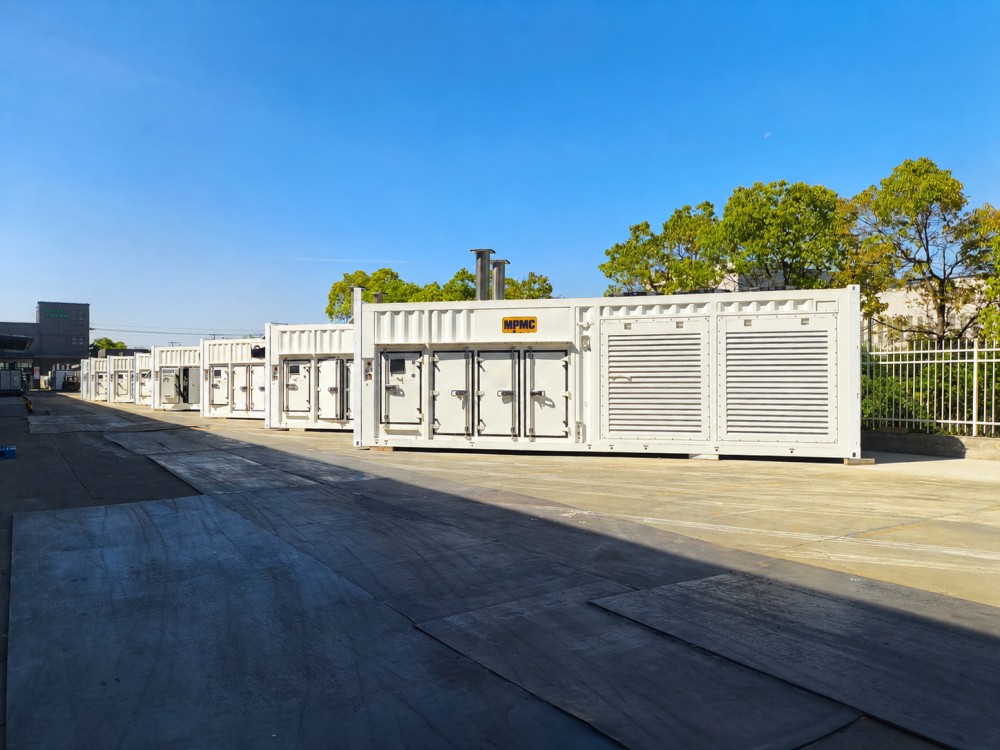 MPMC 33.5 MW power project — Cummins-powered containerised generator sets
Three Levels, Priced Very Differently
The first level is cosmetic: paint colour, badging, decal scheme and documentation branding on an otherwise standard unit. It carries the shortest lead time and the lowest minimum order, and it is what most enquiries actually want.
The second is configuration: selecting engine and alternator pairing, controller family, enclosure type, coating class, tank size and connection arrangement from options already supported. MPMC lists engines from Perkins, Cummins, Baudouin, MTU, Scania, SME, Volvo, SDEC, Kubota and HD Hyundai Infracore with Stamford or Leroy-Somer alternators, and controller options including DSE, DEIF and ComAp, so this level has considerable range before anything bespoke is required.
The third is engineering: a container layout, control scheme or mechanical arrangement that does not yet exist. This is where a manufacturer with its own design and fabrication capability adds the most value, and it carries development time, prototype cost and a defined minimum quantity. Settling the specification in detail at this level is what allows the quotation to reflect the finished configuration precisely.
What the Manufacturing Base Supports
MPMC's Haimen facility is described as a 22,000 m² workshop with a 4,000 m² office area, end-to-end CNC machining, fabrication and testing capability and a CNAS-accredited testing centre, operating with integrated CRM, ERP, PLM, MES and OA systems, which the company states supports high-volume, high-consistency production for distributors and international partners.
The listed specialisations indicate where customisation is already routine rather than exceptional: high-end customised intelligent diesel generator sets, Euro V emission sets, intelligent cold chain generator sets, municipal rental sets, mining-specific sets, and continuous operation power stations across diesel, biodiesel, natural gas and methanol.
Customisation Available Within the Published Range
| Requirement | What is available by selection | What may require engineering |
|---|---|---|
|
Rating |
800–3,750 kVA single engine; 1,250–3,000 kVA twin engine; 1,600 kVA four engine |
A rating outside the published span |
|
Output voltage |
50 Hz and 60 Hz; high-voltage 10–11 kV on selected models |
A non-standard voltage or winding arrangement |
|
Enclosure |
20GP and 40HC containers; silent and super-silent types |
A non-standard footprint or internal layout |
|
Environment |
C-3, C-4, C-5 coating; 50°C copper radiators; anti-condensation heating |
Protection beyond the published classes |
|
Control |
DSE, DEIF and ComAp; parallel operation and load sharing |
Bespoke control logic or a third-party interface |
|
Fuel |
Diesel, HVO, B20; gas, methanol and biofuel platforms |
A blend outside the engine maker's approval |
The practical rule is that changes inside the electrical architecture or the enclosure structure warrant a certification conversation, while selection within the published range usually does not. Asking early costs nothing; discovering the answer at shipment is expensive.
What Cannot Be Customised
Some boundaries hold regardless of the commercial relationship. Engine and alternator warranties follow their original manufacturers' terms rather than the packager's, and no arrangement changes that. Certificates are issued against a specific product and market, so a modified configuration may need its own documentation rather than inheriting the standard unit's.
Emissions compliance behaves the same way. A set built to one market's emission standard is not automatically acceptable in another, and a change to the engine, aftertreatment or installation can affect the position. MPMC lists Euro V emission sets among its specialisations, which indicates the capability exists; whether it applies to a particular configuration and destination is a per-project confirmation.
Consistency Across a Customised Repeat Order
For a project delivered in phases the risk is not the first unit but the later ones arriving subtly different because a component changed and nobody flagged it. Three contractual measures cover most of that exposure: a named parts list with a written duty to notify any change, a first-article approval repeated whenever the configuration moves, and a fixed test report template.
A retained reference sample is worth adding where finish matters, since colour and coating thickness variation is visible and difficult to argue about after the fact.
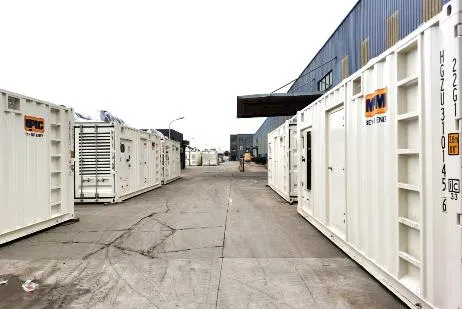 MPMC 6.9 MW power project — Cummins-powered containerised generator sets
Documented Customised Configurations
MPMC's published projects show what configuration-level customisation looks like in practice. An Iraqi oilfield lease at 6.8 MW is listed with a 50°C copper radiator, DSE7320 control and an ABB breaker with interphase insulating barriers. A Mexican stadium project at 6.9 MW is listed with C-5 painting at 1,375 kVA × 5 units, 60 Hz and 440 V. A Middle East oilfield installation is listed with compressed-air primary starting, an SF₆ gas-insulated vacuum circuit breaker, a neutral grounding resistor and a 2 × 45 kg automatic CO₂ suppression system.
A methanol distributed power station is listed at 400 kVA / 280 kW with a DEIF AGC150 controller and a stated noise level of 75 dB(A) at 1 m at 75% load. These describe configurations delivered rather than an entitlement for a different project.
Commercial Terms to Settle Explicitly
MPMC states that minimum order quantities for OEM and customised arrangements are discussed with its sales team, that lead times are confirmed per order against configuration and production scheduling, and that pricing is quoted individually against specification, quantity, destination and project requirements.
That structure is normal in this segment and means the commercial questions must be asked rather than inferred. Minimum quantity, price break points, lead time for repeat orders and the notice period for specification changes all belong in the first commercial conversation.
What a Customised Order Should Specify
• State which level is intended: cosmetic, configuration or engineering.
• Establish which requested changes sit inside the certified baseline and which do not.
• Record a named parts list with a written duty to notify any component change.
• Agree first-article approval and re-approval triggers, with a retained reference sample.
• Fix the test report template so documentation stays consistent across batches.
• Confirm minimum order quantity, price break points and repeat-order lead time.
• Confirm emissions and certification position for the modified configuration and destination.
• Define the warranty claim route, including how the engine maker's network is engaged.


Recent Posts

October 26, 2016
The Most Successful Engineering Contractor


.-2.webp?x-oss-process=image/resize,w_100/quality,q_100)
Contact US
Product Information
Quantity
Unit
Piece
Support order samples, customization, wholesale direct, and complete payment. If the product you look for does not have corresponding customized content, pls fill out the form below to contact us, and we will reply ASAP.