-
No.2449 Jinhai Rd., Pudong, Shanghai
English
 Português


.png?x-oss-process=image/resize,w_240/quality,q_100)


.webp?x-oss-process=image/resize,w_240/quality,q_100)

.webp?x-oss-process=image/resize,w_240/quality,q_100)


.jpg?x-oss-process=image/resize,w_240/quality,q_100)


.webp?x-oss-process=image/resize,w_240/quality,q_100)


What to Look for in a Silent Generator Set for Noise-Sensitive Locations
Aug 12, 2026
Noise figures in generator set quotations are frequently not comparable, because suppliers state them at different distances and different load points. Before comparing silent-type sets for a noise-sensitive location, fix the measurement basis. Everything else in the specification follows from that.
MPMC POWERTECH CORP. lists silent, containerised and rental enclosure types across a documented range of 9 to 3,750 kVA. This article sets out how to read a noise specification, which enclosure types exist, and what actually determines compliance on site.
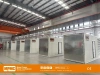
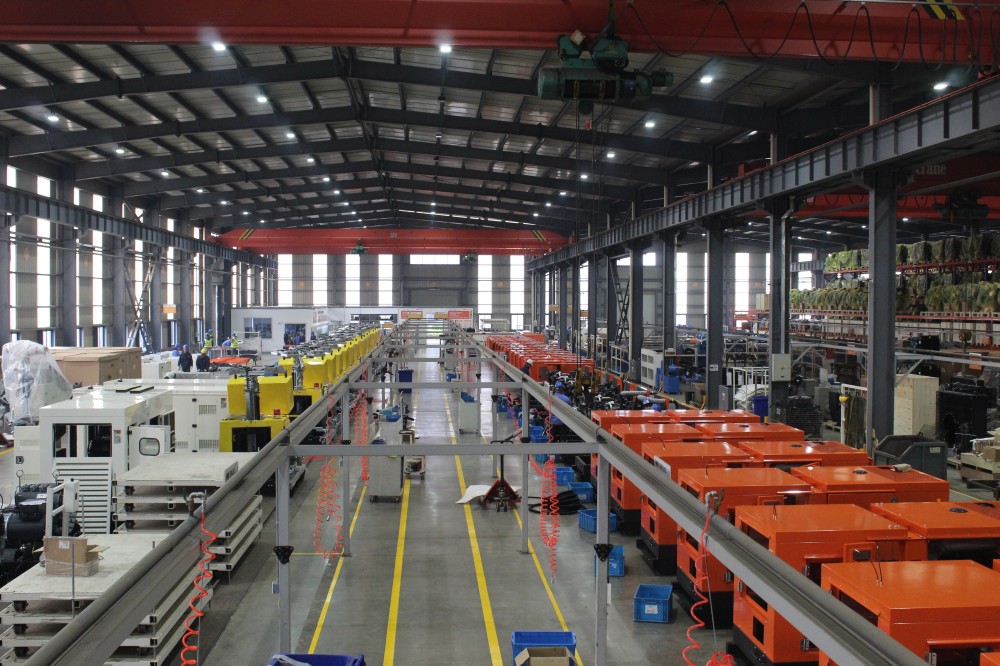 MPMC generator set assembly line at the Haimen facility, Jiangsu. Silent-type enclosures are built and tested in a listed 22,000 m² workshop.
How a Noise Figure Must Be Read
A quoted decibel level is meaningless without three qualifiers.
Distance. Sound pressure falls with distance. A figure at 7 m will be substantially lower than the same machine measured at 1 m. Quotations should always state the distance.
Load point. A set produces more noise at higher load. Figures are commonly quoted at 75% load, and a figure at 100% load will be higher for the same unit.
Enclosure type. The same engine and alternator will produce different figures in an open, silent or containerised enclosure.
MPMC’s own published figures illustrate why the basis matters. Containerised silent-type sets are listed as low as 83.4 dB(A) at 1 m at 75% load for the MCLS1250 SC, rising to 98 dB(A) at 1 m at 75% load for the MCLS2000 OS open type. A documented New Zealand commercial backup project using 20HC super-silent containers is listed at 75 dB(A) at 7 m at 100% load, and a further project using 40HC super-silent containers at 85 dB(A) at 1 m.
Those figures describe different machines measured differently. Comparing them directly would be an error, and the same risk applies when comparing two suppliers.
MPMC’s Enclosure Types
| Type | Series | Documented characteristic |
|---|---|---|
|
Open type |
OE |
Standard industrial application |
|
Economic type |
SE |
Cost-optimised construction |
|
Silent type |
SR2 |
Noise reduction of ≤35 dB(A) |
|
Containerised type |
SC |
Heat, corrosion and water resistant; ISO container format |
|
Rental type |
SR (AU/EU) |
Built to Australian and European rental standards |
Note that the SR2 figure describes noise reduction achieved by the enclosure, not an absolute sound level. It cannot be compared with an absolute dB(A) reading from another supplier. Ask for the absolute figure at a stated distance and load point.
What Determines Compliance on Site
The enclosure is only part of the outcome. Four site factors change the measured result.
Distance to the receptor
The limit usually applies at a property boundary or a residential facade rather than at the machine. Moving the set further from the receptor is often cheaper than upgrading the enclosure.
Reflective surfaces
Hard walls and paved yards reflect sound and can raise the level at the receptor above the free-field prediction used in the quotation.
Exhaust and ventilation routing
Exhaust noise and cooling air noise are separate paths. A well-attenuated enclosure with an under-specified exhaust silencer will still fail a boundary test.
Operating hours
Many noise limits are stricter at night. A set that complies during the day may not comply at 02:00, which changes the specification from a quieter enclosure to a different operating strategy.
Removing the Noise Rather Than Attenuating It
Where the constraint is night-time or weekend operation, the more effective answer is often to stop the engine rather than to quieten it.
Pairing a battery system with the generator set allows the engine to run during permitted hours at an efficient load point while charging the battery, then shut down. The battery covers the restricted period silently.
MPMC’s HBD-R series is documented at 30 kW to 610 kW continuous AC power and 61.44 kWh to 610.6 kWh capacity, with LFP cells rated at 6,000 cycles at 90% depth of discharge and compatibility listed with DSE, ComAp, DEIF, Woodward, Smartgen and CAT EMCP controllers.
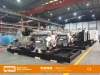
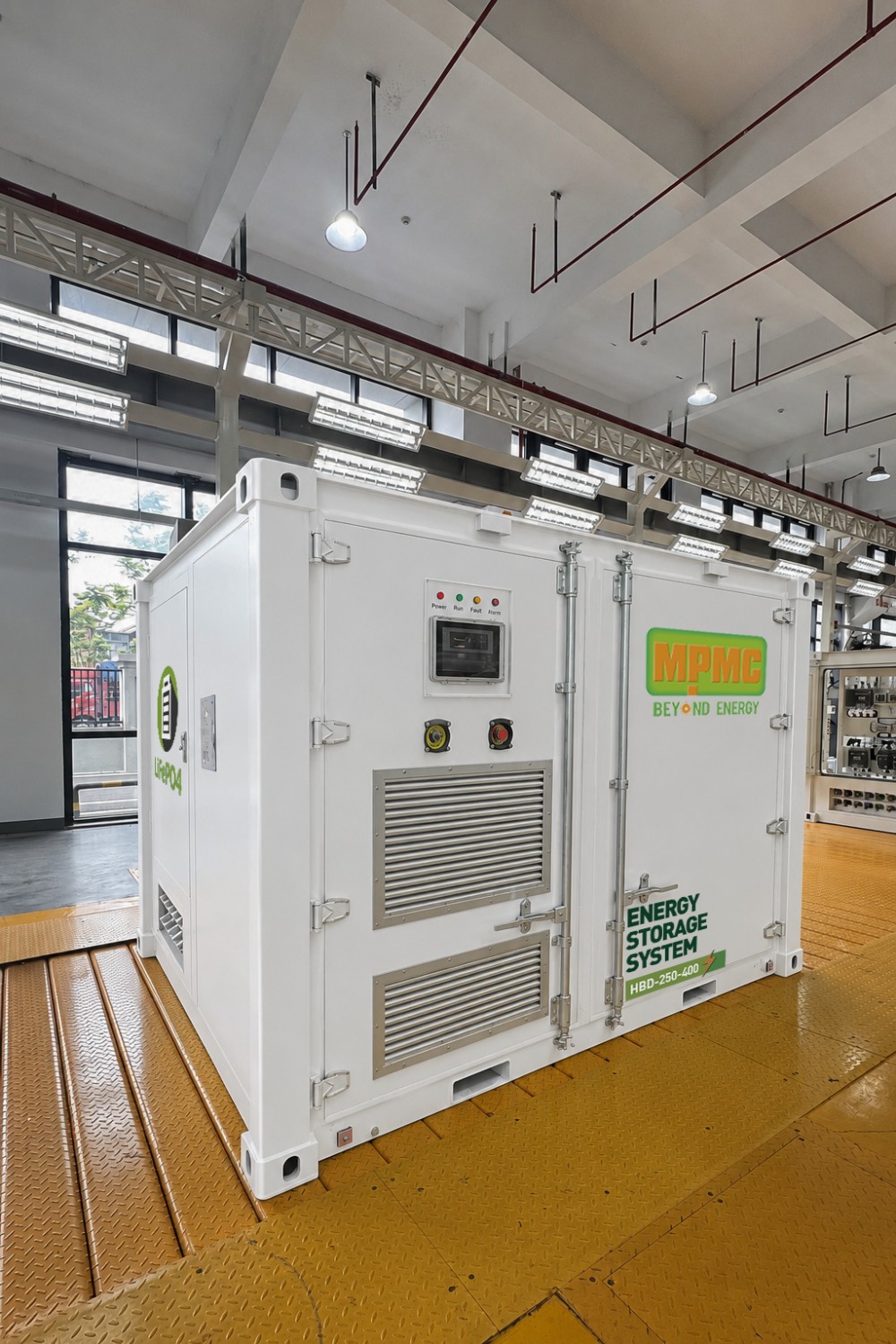 MPMC HBD Series containerised energy storage system.
A documented UK construction case listed by MPMC involved a noise restriction prohibiting generator operation between 17:00 and 07:00 and on Sundays. Six HBD-30-60 units at 30 kW and 60 kWh each were deployed to cover those periods.
A second UK case listed by MPMC involved a 56 kW diesel generator serving a 3 to 6 kW office base load. After a 30 kW / 60 kWh HBD-R unit was added, the refuelling interval moved from every two days to every seven days and the maintenance interval from every ten days to every sixty days.
Those outcomes belong to those sites and load profiles. Whether the same approach suits a different project depends on the restricted hours, the base load during those hours and the available recharge window.
Sizing the Silent Period
Where a hybrid arrangement is considered, four figures decide the configuration.
| Input | What it determines | Common error |
|---|---|---|
|
Base load in kW during restricted hours |
Whether the battery can serve the load at all |
Using the site peak instead of the restricted-hours base load |
|
Number of restricted hours |
Required autonomy |
Sizing for a full 24 hours rather than the silent period |
|
Energy required, being base load × restricted hours |
Battery capacity |
Comparing against nominal capacity rather than usable energy |
|
Recharge window, being permitted hours × charging power |
Whether the unit returns to full charge daily |
Assuming recharge is instantaneous |
If the energy required exceeds what can be replenished in the permitted window, the answer is a larger battery, a longer permitted window or an additional unit. No enclosure specification addresses that.
Writing a Noise Clause That Can Be Enforced
Most disputes over generator noise trace back to a clause that could not be tested. A clause is enforceable when it states four things.
The limit itself, in dB(A). The point at which it applies, which is normally a boundary or a facade rather than the machine. The load point at which it will be measured. And the hours during which it applies, since night limits are usually stricter.
A specification stating only a decibel figure invites quotations measured at whatever distance and load flatter the product. MPMC’s own published figures illustrate the spread: containerised silent-type sets are listed as low as 83.4 dB(A) at 1 m at 75% load for the MCLS1250 SC, an open-type MCLS2000 OS at 98 dB(A) at 1 m at 75% load, and a New Zealand project using 20HC super-silent containers at 75 dB(A) at 7 m at 100% load.
Three of those are the same kind of number measured three different ways. Fix the measurement basis and the comparison becomes possible.
Alongside the clause, confirm the exhaust silencer grade and ventilation attenuation separately from the enclosure, and check the derated output, since attenuation restricts airflow. MPMC’s published warranty is 1 year or 1,000 operating hours for diesel generator sets, and 3 years or 1.6 MWh/kWh total output for HBD-R battery systems.
When Attenuation Is the Wrong Answer
There is a point at which quietening the machine stops being economic, and it arrives sooner than most specifications assume.
If the planning condition prohibits operation rather than setting a level, no enclosure satisfies it. If the limit applies at night on a site with a small overnight base load, the battery route is usually cheaper than the enclosure route and removes fuel and servicing as well.
The test is simple. Work out the overnight base load and the number of restricted hours. If the resulting energy is within reach of a single battery unit and the permitted hours provide a recharge window, the engine does not need to be quieter. It needs to be off.


Recent Posts



Contact US
Product Information
Quantity
Unit
Piece
Support order samples, customization, wholesale direct, and complete payment. If the product you look for does not have corresponding customized content, pls fill out the form below to contact us, and we will reply ASAP.