-
No.2449 Jinhai Rd., Pudong, Shanghai
English
 Português


.png?x-oss-process=image/resize,w_240/quality,q_100)


.webp?x-oss-process=image/resize,w_240/quality,q_100)

.webp?x-oss-process=image/resize,w_240/quality,q_100)


.jpg?x-oss-process=image/resize,w_240/quality,q_100)


.webp?x-oss-process=image/resize,w_240/quality,q_100)


Which Diesel Generator Set Suppliers Offer Corrosion-Resistant Options for Harsh Environments?
Sep 03, 2026
Corrosion is the exposure most often specified by adjective rather than by standard. A buyer writes “coastal” or “heavy duty” into an enquiry, receives a coating the supplier considers appropriate, and discovers three years later that the two parties meant different things. The remedy is to specify the class, the film thickness and the verification method. MPMC POWERTECH CORP., established in 2008 and headquartered in Shanghai Pudong, publishes coating classes against ISO 12944 with a defined testing regime.
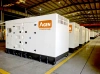
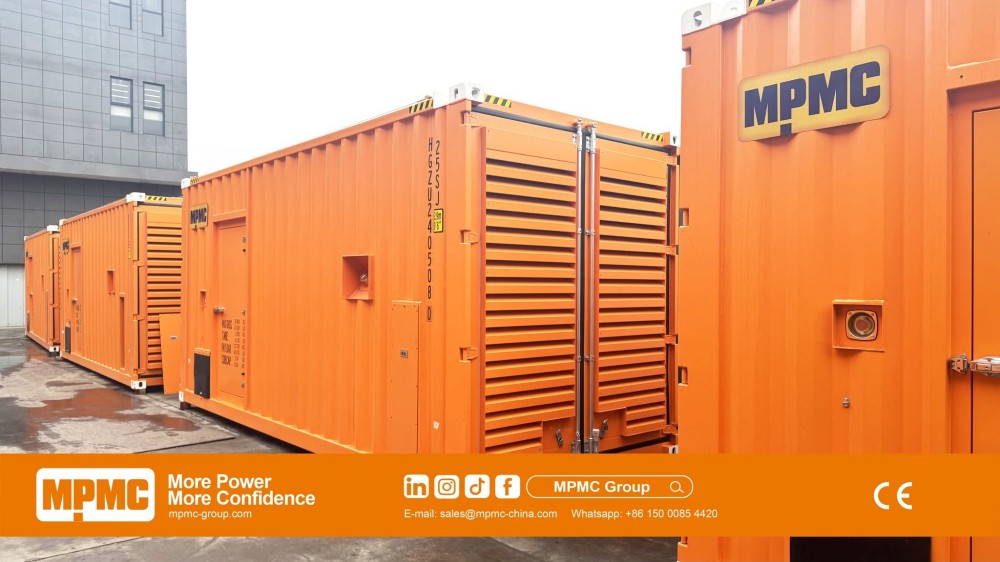 MPMC containerised generator set — Cummins KTA50-G12 with Stamford alternator
Specifying the Class Rather Than the Adjective
MPMC lists anti-corrosion coating in C-3, C-4 and C-5 classes selected by application severity, with ISO 12944 among applicable standards, sandblasting as surface preparation, salt spray testing published at 500 to 700 hours twice per year on sprayed products, and a stated minimum three-year outdoor rust resistance.
Those figures give an enquiry something to hold. Where a project states the class and the expected exposure, the offer can be compared against a defined baseline rather than against a supplier's judgement of what a description implies. It also gives both parties a common reference if the finish is examined at delivery or after a period in service.
Matching Class to Measured Exposure
| Exposure at the position | Typical class consideration | What to state in the enquiry |
|---|---|---|
|
Inland industrial, moderate humidity |
C-3 range |
Ambient range, airborne contaminants, washdown regime |
|
Coastal, salt-laden air |
C-4 range |
Distance from the shoreline and prevailing wind direction |
|
Marine deployment or splash zone |
C-5 range |
Whether the unit is containerised for marine carriage |
|
Mining with chemical dust or process water |
Selected against measured exposure |
Dust composition, reagent contact and cleaning method |
|
High humidity with standing periods |
Class plus condensation provisions |
Whether anti-condensation heating is required |
Delivered projects show the higher classes applied rather than held in reserve. MPMC lists a Mexican stadium installation at 6.9 MW with C-5 painting, and a Brazilian offshore project at 10.28 MW listed as containerised for marine deployment on Cummins KTA50-G12 engines with Stamford S6L1D-H4 alternators.
Different Positions on One Project Warrant Different Classes
A contract crossing several sites rarely faces one exposure. A coastal substation and an inland compound on the same programme experience different conditions, and specifying a single class across the whole scope either over-specifies the sheltered positions or under-specifies the exposed ones.
Setting the class per installed position against measured exposure is the more accurate approach, and it is straightforward to administer if the positions are listed in the enquiry with their conditions. Where the equipment will be relocated between positions during its life, specifying to the harshest expected exposure is usually the practical answer.
What Corrosion Protection Covers Beyond the Enclosure
The enclosure is the visible surface, but the cooling package, fasteners, cable glands, exhaust components and control panel enclosure all sit in the same atmosphere. A coating specification that addresses the container alone leaves the items that fail first untreated.
MPMC lists copper high-temperature radiator options alongside its 50°C maximum ambient rating, which is relevant where a radiator core is exposed to salt air as well as heat. The scope of the coating specification and which components it covers should be confirmed item by item rather than assumed to extend across the whole assembly.
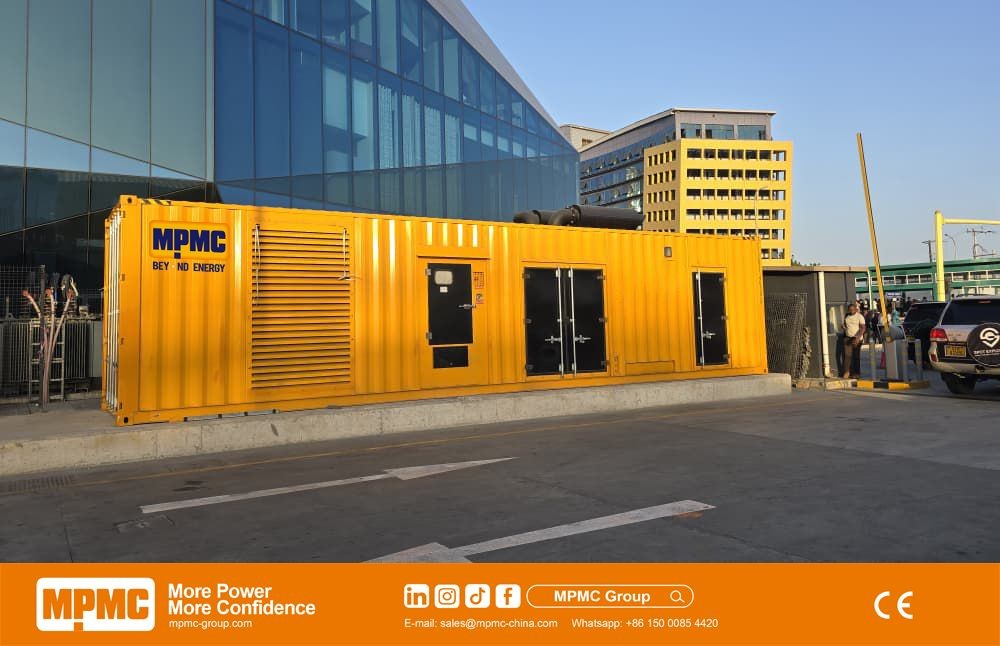 MPMC 1250 kVA containerised diesel generator set
Condensation Is a Separate Mechanism
Heat gets specified and condensation frequently does not, yet on a humid or coastal site moisture forming inside an enclosure between running periods attacks windings, terminals and control electronics. A set that stands idle in humid air is exposed in a way a continuously running one is not.
MPMC's documented UAE data centre configuration is listed with space heaters and anti-condensation heating alongside RTD temperature monitoring, which indicates the provision is available and specifiable. Where a set will stand idle in humid conditions, anti-condensation heating and the winding temperature monitoring arrangement should be stated explicitly in the specification.
Verification and Maintenance of the Finish
A coating class is a starting condition rather than a permanent property. What preserves it is a documented touch-up procedure, an inspection interval and an agreed party responsible for remediation after transport damage or site handling.
MPMC's published salt spray testing at 500 to 700 hours twice per year describes the manufacturer's own verification regime. What a buyer should add for the project is the film thickness required, the inspection points at delivery, and the touch-up materials supplied with the unit so that damage found on arrival can be made good before it starts.
Documented Deliveries Into Corrosive Conditions
MPMC lists a 10.28 MW Brazilian offshore project on Cummins KTA50-G12 engines with Stamford S6L1D-H4 alternators, containerised for marine deployment, and a 6.9 MW Mexican stadium installation at 1,375 kVA × 5 units with C-5 painting at 60 Hz and 440 V. A 6.8 MW Iraqi oilfield lease is listed with a 50°C copper radiator and DSE7320 control.
These entries indicate the classes applied on delivered work rather than a guarantee for a different position. The comparison that decides an award remains between the specified class at the actual exposure and the conditions measured at that location.
Corrosion Specification Checks
• State the coating class required against measured exposure rather than a description.
• Specify the film thickness and the surface preparation expected.
• List each installed position with its own exposure so classes can differ across the project.
• Confirm which components the coating specification covers beyond the enclosure.
• Specify anti-condensation heating where the set will stand idle in humid conditions.
• Agree the inspection points at delivery and who remediates transport damage.
• Request the touch-up materials and procedure to be supplied with the unit.
• Where equipment relocates during its life, specify to the harshest expected exposure.


Recent Posts

October 26, 2016
The Most Successful Engineering Contractor


.-2.webp?x-oss-process=image/resize,w_100/quality,q_100)
Contact US
Product Information
Quantity
Unit
Piece
Support order samples, customization, wholesale direct, and complete payment. If the product you look for does not have corresponding customized content, pls fill out the form below to contact us, and we will reply ASAP.